Thermal Testing with Convection and Conduction… together at last!
Thermal Testing with Convection and Conduction… together at last!

A Marriage Made in Heaven?
[Who could know, but now we do]

The Hybrid Benchtop Chamber – True Thermal Testing Bliss
Combines Thermal Conduction and Convection
in one incredibly fast and efficient design

A heartfelt Congratulation is in order for the happy and successful union of two distinct thermal testing methods that are finally sharing the same dance floor together – as the first true Hybrid.  To better understand the specific benefits from both sides of this collaboration of two testing methods, please review the following white paper:

Conduction vs. Convection for Thermal Testing

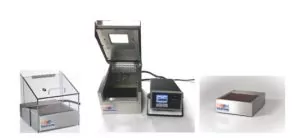
Typical Environmental Test Equipment used for Thermal Convection and Thermal Conduction

Thermal testing by convection is usually achieved with the use of a Temperature Chamber.  For versatility, standard chambers are very popular and meet the needs of a lot of testing purposes.  Chambers provide performance regardless of the shape of the device under test, are typically slower transitioning and settling, and require more lab space.
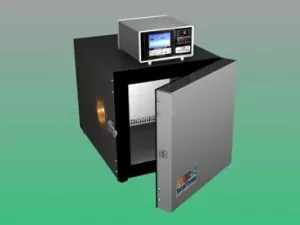
Temperature Chamber

Thermal testing by conduction is most commonly done on a Thermal Platform.  Platforms control temperature by conductive heat transfer and thus are inherently faster however are restricted to devices that have a flat conductive surface or can be fixtured to work on a platform.  Platforms provide fast-cycling time, require little laboratory real estate, and offer very good accessibility to test objects.
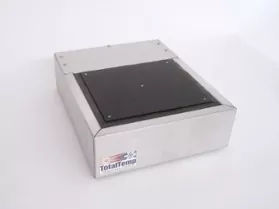
Thermal Platform (Coldplate)

Hybrid Benchtop Test Equipment Solves Many Problems

* Improves thermal uniformity gradients

* Increases throughput with faster cycle times

* Small footprint with easy access benchtop operation

* The fully-featured Synergy Nano Temperature Controller is capable of controlling platform temperature and air temperature independently or together

* Controller offers DUT and other data logging, remote access, cloud capability, and many networking functions
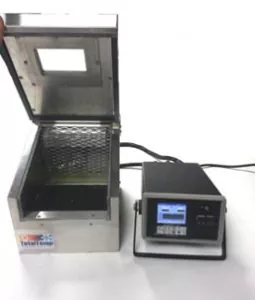
Click here: Hybrid Benchtop Chamber Page

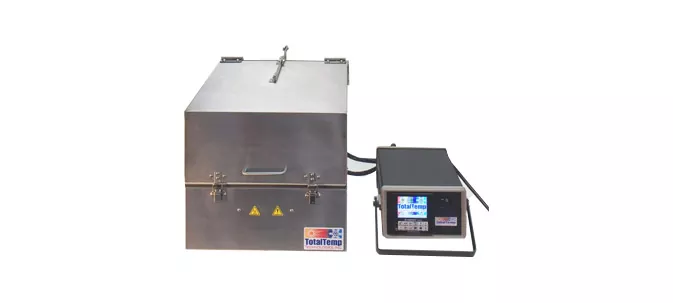
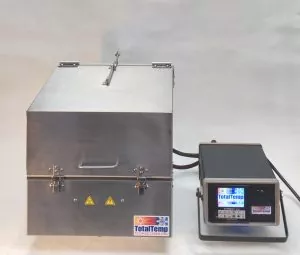
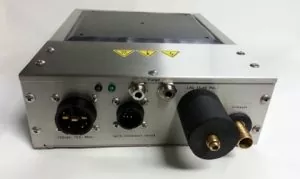
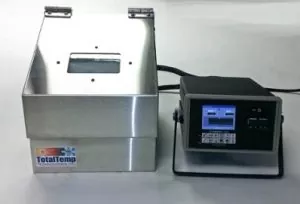
Hybrid Benchtop Chamber Test Equipment

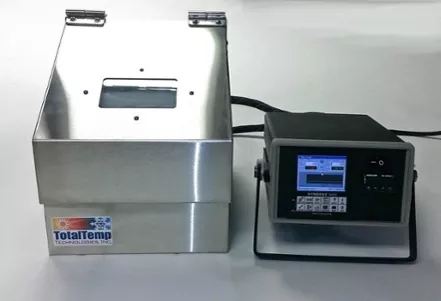
Shown with Lid up revealing the Thermal Platform floor of the Chamber

Thermal testing is an important part of electronic manufacturing for reliability and design verification.

There are a variety of products for thermal testing and now TotalTemp is presenting a completely new and unique contender.

Temperature chambers, thermal platforms, air forcing units, and liquid baths have been around for a while and work well with many types of testing requirements.   But the Hybrid Benchtop Chamber Test Equipment provides many of the best features of Temperature Chambers and Thermal Platforms together to maximize performance and control and shows new promise of filling the need for faster, superior thermal testing.

Hybrid Benchtop Chamber Has Performance Results
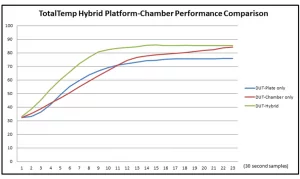
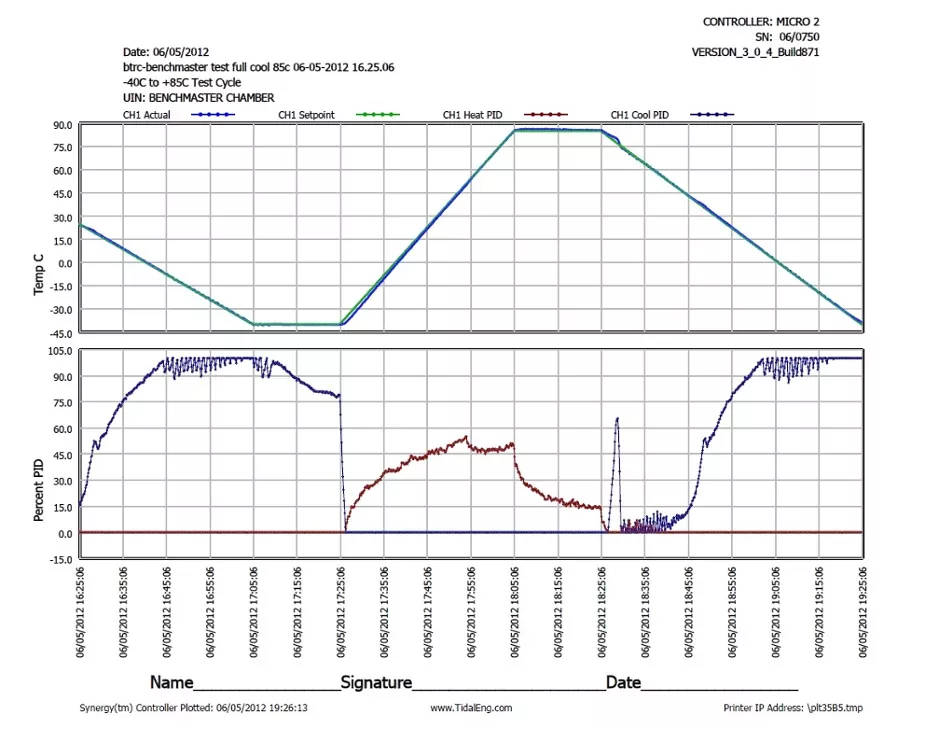
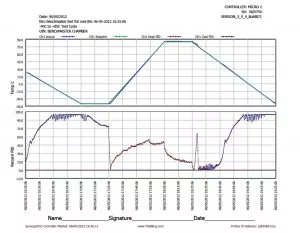
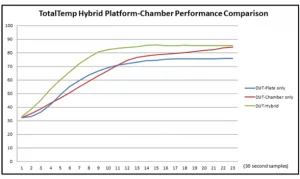
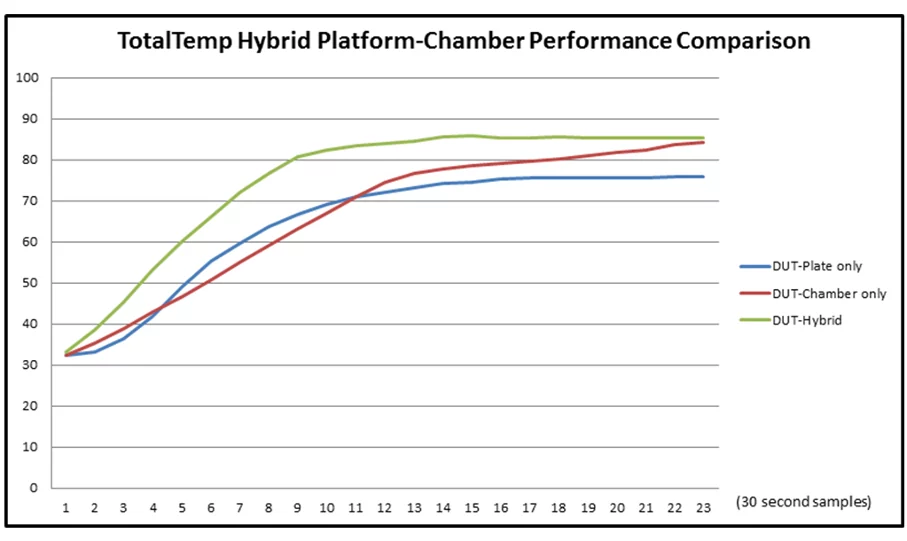
As shown in the data chart above, in the basic operation mode, The Hybrid Benchtop Chamber demonstrates a significant improvement in thermal test performance.  The floor of the chamber is a completely functioning Hot/Cold Plate and operates independently or in conjunction with the chamber.

Because the controller is capable of advanced temperature control algorithms, it can allow even better performance by monitoring DUT temperature and allowing air and platform temperatures to be carefully controlled while verifying that required DUT temperatures are achieved.

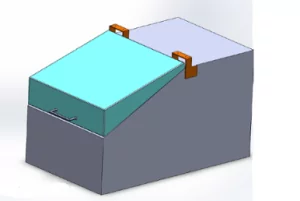
The standard model currently available is called the HBC49-N with a thermal platform size of 6.5” D x 7.5” W, the chamber interior dimensions are  8.5” W x 7.5” D, Height is 4.5” to 6.5” at the rear.  The system can be cooled with liquid nitrogen (L-N2) or liquid carbon dioxide (L-CO2) and is rated for a temperature range of -100°C to +150°C.

TotalTemp Technologies is the manufacturer of the Hybrid Benchtop Chamber.  TotalTemp is a manufacturer of temperature cycling and conditioning equipment.  They are located in San Diego, CA.
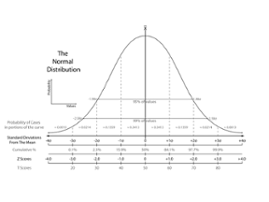
Calculus v. Statistics is it an Ongoing Battle?

Calculus v. Statistics is it an Ongoing Battle?

Which is more useful? Which is more significant to science and business or civilization?

I believe calculus has to come first but I don’t really think either is better.  This is my opinion. Both have their own appropriate applications and end goals.

Just a quick high-level review and opinion refresher here…

Calculus is Deterministic, if you need to plot a course to Mars, you would use calculus.

Statistics is Relativistic. Statistics would be used more to decide where you would want to land on Mars.

Vs. 

According to Wikipedia Calculus is the mathematical study of change as Geometry is the study of shape and algebra is the study of operations and their application to solving equations.

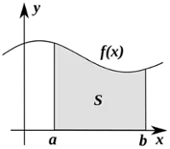
The study of Calculus has two major branches; differential calculus (rates of change and slopes of curves) and integral calculus (accumulation and area under a curve)

Statistics on the other hand is about the collection, all aspects of analysis, interpretation, presentation, and organization of data.

The two main branches of statistics are  1) Descriptive statistics which is about quantitatively describing or summarizing the main features of a collection of information or the quantitative description of the data itself.  Concepts like the mean and the standard deviation are the realm of Descriptive Statistics. and 2) Inferential statistics are used to infer properties about a population of data: this includes testing hypotheses and deriving estimates. The population is assumed to be larger than the observed data set; in other words, the observed data is assumed to be sampled from a larger population which attempts to infer propositions.  Point estimates and interval estimates are the realms of Inferential Statistics, according to Wikipedia, interval (Statistical) estimation is the use of sample data to calculate an interval of possible (or probable) values of an unknown population parameter, in contrast to point estimation, which is a single number.

Calculus is used in every branch of science, computer science, (even) statistics, engineering, economics, business, medicine, and in other fields wherever a problem can be mathematically modeled and an optimal solution is desired. It allows one to go from (non-constant) rates of change to the total change or vice versa. Often studying a problem where we know one and are trying to find the other related data.

Statistics helps us find truths or trends in the mountains of data we produce, often reducing the need to do Calculus on each and every alternate possibility.

People often lean towards one or the other as a preference but I think there isn’t really a battle of one being better than the other.

Personally, I prefer Calculus for its deterministic nature. Maybe also due to being exposed to more of it in school and work. If I had to choose one it would be Calculus.

As a final comparison on the more practical level in my work, Calculus is used to design the circuit; Statistics are used to determine the most effective testing of the product functionality and reliability before shipment.

Both apply if you are doing product testing.  If you are thermal testing in temperature chambers or on a thermal platform, you might be verifying a design built on Calculus or using Statistics to ask the questions and get answers about the yield on your production.

Cryogenic Cooling Safety

Cryogenic Cooling Safety

Liquid Nitrogen (L-N2), Liquid Carbon Dioxide L- CO2) and other cryogenic coolant coolants have potential risks but can easily be safely managed like many things in the lab. The effective and rapid cooling these fluids produce is a great convenience for thermal testing.

Similar to other potential hazards such as flammable liquids, electricity, hot surfaces, chemicals, etc. Cryogenic fluids can be safely used when aware of a few basic precautions.  The main precautions are as follows:

  • The extremely cold temperatures of cryogenic liquids can cause burns.
  • Pressurized liquids and gasses require proper pressure regulation/venting.
  • Tanks are often very heavy and pose risks should they fall over.
  • In extreme cases, excessive use can displace breathable Oxygen in the air.

Taking Proper Precautions

When making or undoing connections to cryogenic fluids, always wear gloves and eye protection.  Preferably heavy leather gloves full face shield.  In General, the rule is hands-off of plumbing and devices at cryogenic temperatures.

Be aware of the controls/safety features of any cryogenic liquid delivery system. Know how to use these controls. Locate safety vents or ruptured disks that might unexpectedly produce a stream of cold vapor.  Here is a supplier’s link with more detailed LN2 safety information and an explanation of the controls on a cryogenic liquid vessel. Tanks have many built-in safety devices to prevent over-pressurization and general safety.

Never tamper with any of the safety devices on a tank and do not adapt connections other than standard LN2 designated connections. Not just your eyes and flesh but many items in the lab become damaged or behave differently at these extremely cold temperatures. For example, typical foam pipe insulation from materials such as polyethylene becomes extremely brittle and shatters at temperatures of Liquid Nitrogen which is typically -185 C.

Be aware that cryogenic liquids expand dramatically and forcefully in the process of use and also during unintended vaporization in the hose. When connecting equipment to a source of cryogenic liquid, there is often an automatic valve at the downstream connection that is normally closed.  After the system is used and the operator believes that he is safely shutting off the coolant source at the tank, an unsafe condition can be created. With a closed valve at both ends of a liquid-filled hose, the increasing pressure as the liquid warms can rupture the hose. The hand valve at the tank should only be closed when you are sure there is no cold liquid in the hose.  For this reason, our LN2 hoses employ a pressure relief valve that will limit the maximum pressure to a safe level. Likewise, any device using coolant must have a functioning exhaust to vent the spent coolant.

The contents of high pressure (~900psi) CO2 tank are stored at room temperature so although the pressure is much higher in the hose, to begin with, it does not increase as it sits in the hose.  You can close the hand valve on a CO2 tank at any time without risk.

LN2 tanks or dewars as they are known (vacuum insulated thermos-like bottles) rarely tip over due to the wider base but must be placed on a stable level footing. Slimmer High-pressure CO2 tanks are more prone to tip over and must always be restrained when stored in the lab for even short periods of time. The valve on the top of the tank can break if the tank falls over and cause very dangerous situations. LN2 tanks typically have a steel “halo” around the controls and ports at the tank. This increases the safety of many tank accidents.

CO2 and LN2 are both non-toxic and large parts of what we normally breathe.  Use of these cryogenic fluids in a normally ventilated area is not a problem however if the ventilation is abnormally low or there is a very large amount of coolant being used, an Oxygen monitoring device should be used to monitor the Oxygen level in the room. Exit the room without delay if Oxygen levels go below 20%.

CONCLUSION

Cryogenic coolants like many things in the lab are easily handled in a safe and efficient manner by paying attention in general and being aware of a few basic concerns.

Cost effective wide range thermal testing

Cost effective wide range thermal testing

Testing at extreme temperatures requires considering several options. Testing at hot temperatures has its issues, however, testing at ultracold temperatures – below -40 C in most cases requires the use of expensive and sometimes failure-prone cascade refrigeration systems or alternately applying expendable cryogenic fluids such as liquid nitrogen or liquid CO2.

High-performance cooling is often more of a challenge than heating and also tends to be the least understood process.  The high initial cost is a well-known roadblock to acquiring the best equipment to do the job. Often the unknown or under-reported cost of running a refrigeration system, electricity, maintenance plus possible downtime also require consideration. When thinking of expendable coolant solutions, facilities managers often have some pushback to pressurized liquid Nitrogen or other cryogenic fluids.  Cryogenic fluid distribution systems can be another convenient and safer alternative to large tanks. Unless there are consistent and large-scale uses they are often not warranted due to the extreme installation costs.


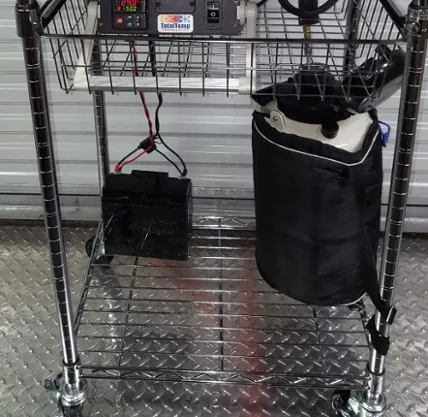
10-liter tank on a lightweight portable cart

These safe and effective portable systems solve many Cryogenic Temperature testing requirements.

Moving Forward

Another often overlooked option for testing at extremely cold temperatures is a low-pressure Liquid Nitrogen system. I am referring to is a small portable low-pressure LN2 tank. For example, if you have a 20-liter portable tank you can carry the tank easily by yourself or transport it on a light-duty cart. It will store (with some loss) for well over a month, and best of all you can hold a thermal platform at any other similarly efficient (if it is such) thermal testing system at -50C for hours or ramp to -50C several times without refilling or swapping tanks.   Doctor’s offices often use small portable LN2 tanks with just enough pressure to make the Nitrogen come out of a nozzle.  Similar systems can be used to provide cryogenic cooling to small chambers or thermal platforms.  Sometimes these systems can safely have their pressures boosted by a small amount to achieve really good performance.

New technologies are helping Liquid Nitrogen generating systems be more widely available. Systems such as Elan2 products make homemade LN2 a cost-effective, efficient cryogenic cooling strategy.

Contact us if we can help with any concerns you may have about cryogenic cooling for environmental testing.

Evaluating Thermal Imaging for Temperature Test

Evaluating Thermal Imaging for Temperature Test

Initial FIndings

We acquired a FLIR ONE for Android from sources online, they are about $250 in most places. So the question is Toy or valuable tool. My opinion is Both! Not to deny the fun factor, (it is important to enjoy your job, right?) I say very much more on the useful tool side.  In the 90’s we paid more than that just to bring our products to a facility that allowed us to do some brief tests with less conclusive results. Laboratory grade thermal imagers still have a comma in the price tag and go upward from there.  This unit is primarily marketed as an uncalibrated tool but I found that the Flir One gives some very useful relative readings for testing and evaluating purposes.  As for absolute temperature readings, there is still a little something to be desired. The unit’s instructions are a little vague regarding measurement accuracies but the on-screen spot reading is quite useful.  The FLIR One unit offers better image quality and measures tenths where other units such as the Seek Compact thermal imager show readings with less precision.

Emissivity is an important factor in thermal imaging. Per the Wikipedia link here, emissivity is the effectiveness of a surface in transmitting energy as thermal radiation.  A cat would have very low emissivity whereas a black anodized aluminum surface would have nearly 1.0 emissivity. Professional grade and Non-imaging handheld thermometers all struggle some with emissivity. This unit has four different emissivity settings.

Useful Findings

For our Thermal Platform Business as you might expect it is useful in demonstrating the advantages of the thermal platforms and our Hybrid Benchtop Chamber over other environmental test equipment or thermal testing gear.

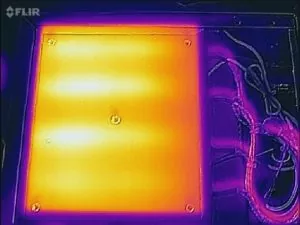
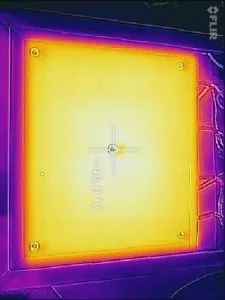
Examples here show a Thermal Platform heating up with locations of heaters evident and then a few seconds later stabilized at a hot temperature.

Thermal Platform heating to the temperature

In this case, further adjustment of the camera’s emissivity settings allowed more accurate absolute readings.

The thermal imager is also very useful in finding gradients during thermal tests and hot spots due to internal device heating or “convection shadows” which frequently happen with standard temperature test chambers.

Sensitive Relative Readings

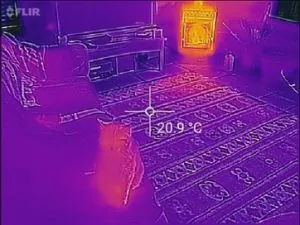
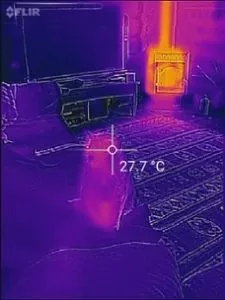
Here is a surprising little demonstration.  Having a foot on the carpet for just 20 seconds, the heat transmitted through a thick boot sole and sock shows up as 2-3 tenths of a degree temperature gradients several seconds after the foot was moved.  More specific thermal test examples to follow but you can see how this tool would be useful to evaluate thermal stresses in electronic and power control systems.

Here are what I feel to be the takeaway points:

  • Quick easy and low-cost demonstration of temperatures differentials.
  • Accurate absolute temperature readings are more challenging.
  • Paying attention to the unit under test emissivity helps achieve more accurate results.

Is Thermal Testing a Necessary Evil? – Made Better Here

Is Thermal Testing a Necessary Evil? – Made Better Here

Automation makes it easier

I am thinking a certain number of test engineers feel that thermal testing is more of a necessary evil than a joyful endeavor. Well, we are here to make things fall as much as possible onto the side of the joyful endeavor.

How does that play out in the real world? My thoughts include several aspects of thermal testing that can make it feel more like a joyful endeavor.

1) Knowing that you are working toward a goal of making tested, and reliable hardware can make it feel like valued work.  People don’t enjoy making junk.

2) Not following an arbitrary script but doing real verification, tracking results with the ability to easily analyze and not a lot of manual parsing of data also makes it more enjoyable and improve quality.

3) When done correctly automating a process will produce easier, more consistent good results.

4) Traceability – Providing a detailed written report without spending hours toiling over numbers easily proves that the job was done correctly.  Thermal testing is all about verification, Right?

5) Saving money is generally a good thing, hopefully, more profits, eventually more for the people who do the work too.

The Synergy Nano temperature controller helps to achieve the above goals with automation plus precise temperature control. Just one instrument is required to produce printed results whereas in many cases these results might require several expensive pieces of equipment and hands-on data manipulation.  The Synergy Nano has easy-to-use interfaces that can provide communication over Ethernet, serial, GPIB front panel, and other means. Logging several DUT temperature points is easy. Ramp and dwell profiles can be loaded by a user or by computer then stored/transferred as needed. Remote monitoring in real-time via a web server is easy as well. FTP data transfer or front panel graphing and thumb drive capture add flexibility. Logging of setpoints, numerous data options, even PID information or system, and DUT temperatures complete the picture.

A real big-time saver and the main point of this conversation is quickly producing documented results. Synergy Nano’s ability to print PDFs of test results and send that plot directly to a network printer or email in real-time without a PC adds real value.

Several of the below-detailed automation features also expedite the process of making accurate test results happen quickly.

Here are several useful links to some of the application notes/videos with additional information about automating your thermal testing with the Synergy Nano:

Network Plotting and Printing

Email notifications

Logging

Thermocouple data acquisition/logging with UUT modules

Synergy Server for automating data collection among several test stations

Synergy Controller Cloud Storage

Using Synergy’s FTP server

FTP Server Demo VIDEO

Web Server function

Web touch Web Server demo VIDEO

Manual data graphing Demo VIDEO

 Part 1 of Temperature Profile wizard

Part 2 of Temperature Profile wizard

If you are interested in more information on how to make your thermal testing better faster, more efficient, and maybe even more fun too,  then…

The Bigger Picture of Cryogenic Cooling Costs

The Bigger Picture of Cryogenic Cooling Costs

First thoughts on cooling

Many people initially think of refrigeration compressors for cooling when product testing. Compressors work great for home refrigerators and sometimes they work the best for temperature chambers or thermal platforms as well. There are caveats but the main conditions where mechanical refrigeration systems work best are as follows:

  • Where the temperature is held steady for long periods of time.
  • Where cooling rate or getting to temperature quickly is not important.
  • When the lowest temperature range required is above -35C.

The hourly cost of consumption for cryogenic cooling using expendable refrigerants like Liquid Nitrogen or L-CO2 is indeed higher but in the big picture, often the total cost of running mechanical refrigeration is greater.  Several factors can contribute to the cost advantage of using Liquid Nitrogen.

  • The initial cost of cryogenically cooled equipment is generally much less due to the far lower complexity.
  • Productive thruput is generally greater due to the cooling speed of LN2 and often even reduces real estate square footage requirements dedicated to testing.
  • Simpler system design of LN2 systems directly relates to less money to maintain.

Within limits, speed generally = productivity. Ramping to temperature with mechanical refrigeration can be time-consuming.  The faster cooling times of expendable cryogenic coolants represent a large percentage of the ongoing savings using LN2 or CO2. More batches per day can be accomplished by reducing the requirement for yet more costly test stations, the space to keep them, and the energy to power them.  If your testing routine requires more temperature cycling pulldowns to cold temperatures or your devices are active/massive loads, the savings can be greater with Liquid Nitrogen cooling.  LN2’s superior ability to remove heat gives it the capacity to get cooling jobs done in favorable time frames.

While the efficiency of scale is to be gained with larger temperature test systems, benchtop systems with smaller batches can make sense too.  I am reminded of the theory of optimum carpooling partners which says If you carpool with one person, you cut your driving in half, you would have to carpool with everybody to eliminate the other half of the driving…  Not to mention the delays that would inevitably happen.  As I digress, the point is that a lot of time can be spent waiting to get many devices ready to undergo tests, thus holding up testing progress.

Cascade refrigeration systems used to cool to temperatures below -40C have had made strides towards improved reliability in recent years but are far more complex than single-stage systems, more expensive to buy, operate and maintain.  Another story here: When I worked at another thermal test equipment company, I remember being more than a little surprised when a contractor had performed warranty repair work on a refrigeration system at their shop. They had an amazingly large line item on the bill for “Electricity used by the unit while in the shop”.  Just how legitimate the charge was can’t be said but there is a significant cost that often is not seen or figured into ownership of refrigeration systems.

Actual costs of course will vary; load, profile other factors play into the decision.

We sell systems with mechanical refrigeration and systems with expendable cryogenic cooling so we don’t have too much agenda beyond helping you find the system that best suits your application.

Small Hybrid Benchtop Chamber            Mechanically Chilled Hybrid concept


Several aspects of the overall cost of operation/ownership of mechanical refrigeration systems v. expendable cryogenic liquids are covered here, if you have any questions about general possibilities or your specific application, contact our engineers who are available to help you find the test equipment you require.

Thanks for reading and thinking about your thermal testing requirements.

Thermal Imaging Reveals Environmental Test Performance

Thermal Imaging Reveals Environmental Test Performance

The Smartphone-based (FLIR-ONE in this case) infrared imager is really useful for displaying very small relative temperature gradients. The Hybrid Benchtop chamber brings to your lab bench performance in the form of convenience, automation, and also thermal performance capabilities that are easily seen with these relatively inexpensive imaging tools.

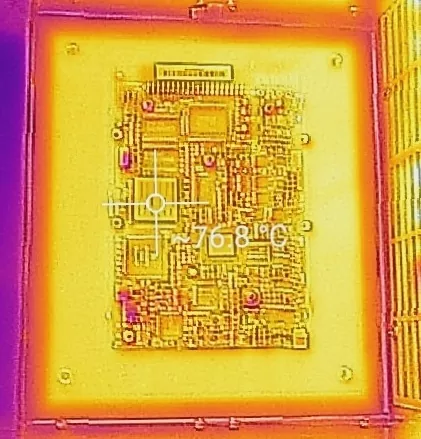
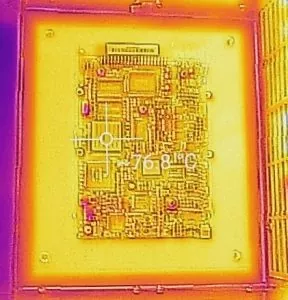
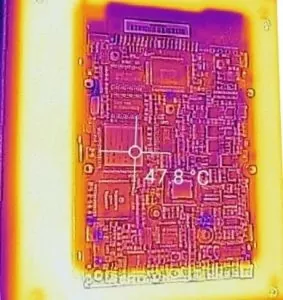
On the left- at 5 minutes in the hybrid benchtop chamber set to 75°C, a thermal image of a computer hard drive as a Device Under Test (DUT) shows very good thermal uniformity.  On the right, the same part on just a thermal platform alone still gets the base of the part to temperature very quickly but shows larger gradients to the surface of this higher profile part given a similar timeframe.

Using just a chamber alone can achieve the same uniformity for this part however due to the limitations of heat transfer by convection, the time required to achieve good uniformity is much longer.  Often twice as long.

The Hybrid benchtop chamber gets parts to temperature faster like a thermal platform while minimizing thermal gradients of the parts like a chamber. The Hybrid design helps the thermal platform along with its many other advantages work effectively with higher profile parts.

Thermal platforms alone are often an optimum solution for a lower profile and active heat-producing parts.

Without the thermal imager in hand, temperatures are easily and automatically measured by the Synergy Nano Temperature controller at several points on the DUT thus confirming the speed and uniformity of the Hybrid Benchtop ChamberAdvanced temperature control algorithms (cascade PID loop) provide good benefits to speed up the process as well.

The Synergy Nano temperature controller controls a profile and logs any thermal testing results to local storage. At the completion of the test, the controller delivers the test results automatically.  It can use email to deliver charts and logs in PDF format directly to a network printer without a PC. This makes the whole process more efficient.

Temperatures can be measured at several points on the DUT to confirm speed and uniformity. Advanced temperature control algorithms (cascade PID loop) can improve the performance as well.

Thermal Test Engineers are becoming accustomed to a new level of thermal test performance with TotalTemp Technologies products.

Optimizing Thermal Testing on Hot/Cold Plates

Optimizing Thermal Testing on Hot/Cold Plates

Thermal Platforms are a great alternative to a temperature chamber for accessible benchtop thermal testing.  Keeping a few key points in mind will help make testing go as effectively as possible.

  • Good surface-to-surface contact.
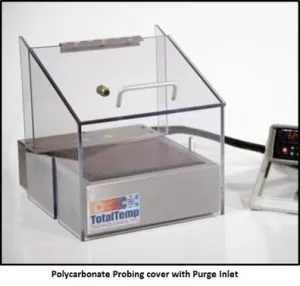
  • Protect the component from air currents with a cover.
  • Since the temperature at the surface to optimize thermal performance and confirm low gradient results.
  • Use the best coolant for the application.

An economical thermal testing system, the thermal platform can be a great alternative to a chamber under many conditions.

Good surface contact is key, if your device does not have a flat thermally conductive surface, it may not be a good candidate for testing on a thermal platform.  Always make sure the surface contact is as intimate as possible without particles or gaps in between surfaces. mirror-smooth surfaces are best and thermal compounds always have some thermal resistance so a minimal amount of thermal compound is best to fill microscopic gaps in the contact surfaces.

Air currents can definitely cause thermal gradients to show up in testing.  A cover is always recommended to minimize gradients. Especially at extreme temperatures. The Hybrid benchtop chamber actively controls gradient with an independently controlled air zone above the platform but simple covers are often effective for reducing gradients.  An intermediate cost alternative is also our purge conditioner system with an internal heat exchanger that conditions the air before it enters the cover above the thermal platform.

Purge gas conditioning in / out shown top, center

Monitoring the temperature at the DUT or any specific point of interest verifies that the results are being achieved and also allows the use of advanced temperature control algorithms that can get the device to temperature more quickly and control overshoot in the process.

DUT temperature sensing block

Whether LN2, CO2, vortex tube, or mechanical refrigeration, for the available facilities resources, ramp rate, and range requirements TotalTemp can certainly help you make the right choice for your application. Call or Email us.

Temperature testing on a thermal platform can produce fast and convenient high-quality results with attention to these few details.  Automation features of the Synergy Nano temperature controller will also help you produce demonstratable results while meeting your thermal testing requirements.

Rant on Polarized Power Plugs

Rant on Polarized Power Plugs

I like to talk on topics relevant to thermal testing however this post is a little break from normal and an opportunity to whine about a common annoyance.  I welcome anyone else who thinks differently or believes I am off base to chime in.

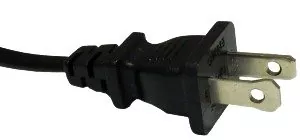
I know polarized power plugs are that way for our safety and I should be grateful but on the other hand, I find them particularly annoying,  especially when going into the supposedly modern flat face receptacles that don’t have the usual ‘funnel shape’ designed to guide the plugin for easier insertion.  The plug on the coffee grinder I start my day with has a habit of going far enough in backward to get stuck but not far enough to work.

I often think that a three-pronged plug is less annoying because it is pretty clear which way it goes in before you get close, the ground lug is designed to make contact first plus it otherwise genuinely does a better job of increasing safety and ease of mating.

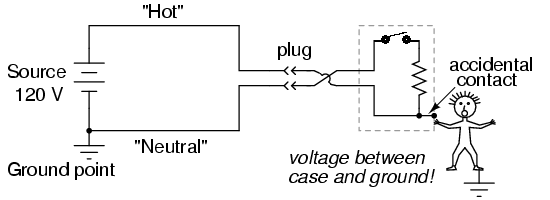
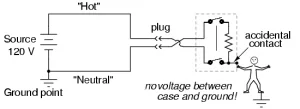
The concept of the polarized plug is pretty simple but far from foolproof. For agreed-upon safety reasons, 120v. wiring in the US and the standard line voltage in many other countries have one leg that is ‘hot’ and the second leg is neutral. The ‘hot’ wire is connected to the very slightly smaller receptacle, (right side). Neutral means that it is connected to the ground at the main circuit panel. You generally can’t get shocked by touching just this wire unless someone has miswired things. Keeping this ‘polarity’ extended internally to the device allows the product to be made somewhat safer.

In this graphic from allaboutcircuits.com, when the switch at the top-right is OFF, the accidental contact would have been safe if the plug polarity had been maintained.

Should the accidental contact happen on the other side of the load (top right) and polarity be correct, there would still be shock hazard but it would be limited to the time that the power switch is ON.  Sometimes manufacturers can look at the product and otherwise predict which wire is more likely to make some accidental contact (motors for example).

Additional safety would be provided if the product case (shown with dashed lines) is connected to the ground with a grounded power cord. The intention of the ground is to cause an external fuse or breaker (not shown) to blow should this ‘accidental contact’ from the circuit to the product case occur. This renders the product unusable until short is cleared.

Safety engineers have agreed that we should have a third wire, not to rely on the proper connection of the other two even though one is connected to the ground already. Under normal conditions, no current would be flowing through a separate ground wire. A nay-sayer like me might argue that there are more opportunities for wiring errors and a grounded product housing might provide another pathway to get shocked if a person touched wiring and the housing at the same time but I am sure that like seatbelts, statistically many more lives and injuries are saved when grounding wiring is used.  Even if not always 100% properly used.  An additional benefit from a third wire is for protection from electrical noise on today’s products that are generally becoming more sensitive to electrical noise.

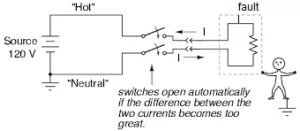
My position is that manufacturers should do one little inexpensive change to make the product a bit safer before relying on the polarized plug. A double pole power switch would isolate both sides of the circuit should ‘accidental contact’ occur anywhere downstream from the switches (when OFF). When the switch is ON, some equally reduced risk of shock still exists in either case.  The level of safety is the same with a double pole switch as provided by the properly connected polarized plug when the switch is ON.

I am also in favor of additional use of technology that is pretty much commonplace and better refined today. This is the Ground fault interrupter or GFI receptacle/circuit. These circuits are now more reliable and fit into the electrical box inside the power receptacle. The theory is that if the sensors in the GFI since even a very small difference in current measured on one leg to that of the other, they will immediately interrupt the circuit. If the currents are not the exactly same, the presumption is the current is somehow going through a ground fault which may be through a human body. GFI circuits provide safety regardless is the switch is on or off and generally are the only disruption to life when there is definitely a problem. Nothing could go wrong, right?

Well generally that is the expected result without too much deviation and I would say that for the cost, higher risk areas, receptacles should be protected with GFI devices, especially in labs, kitchens, garages and where things get worked on and other risks such as water or pipes (grounding) exist. I say instead of polarized plugs, all devices should employ switches on both the hot and the neutral in the event that a plug or wiring is somehow backward, or something else unexpected goes wrong. Get rid of the polarized plug. What say ye?