TotalTemp Technologies Company News

Evaluation Engineering Magazine

Special Report: Power Semiconductor Test

Power semiconductor test vendors discuss trends and challenges in SiC, GaN, IGBT and more

Article By: MIKE HOCKETT
 MARCH 25, 2019

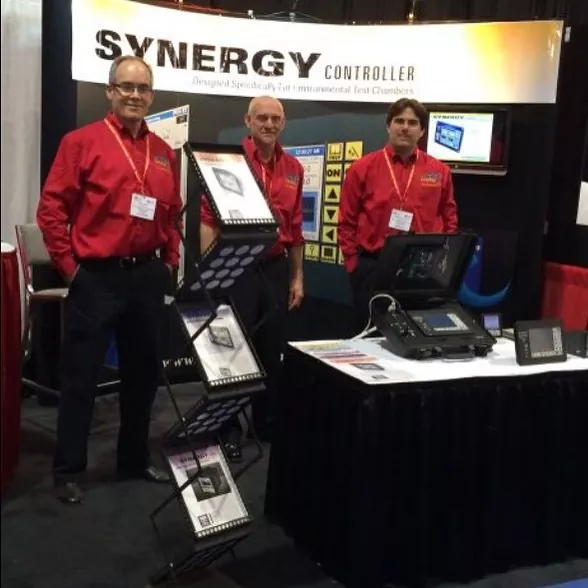
JB with our controller Friends at the Automotive Test Expo
Benchtop Thermal Testing! At the EDI-CON Show in Santa Clara today.

see us at #OFC2018 We are with @MPIThermal in booth 1912

Visit us at #IMS2018 this week in Philly. Booth 648 with MPI Thermal

  Sep 2018

Visit TotalTemp at the #SpaceTechExpo booth 4027 with #MPIthermal

 on Instagram

TotalTemp will be in booth 648 with @MPIThermal at the IMS2018 show in Philly next week. Thermal platforms, Benchtop chambers and thermal test equipment.

Visit us there!

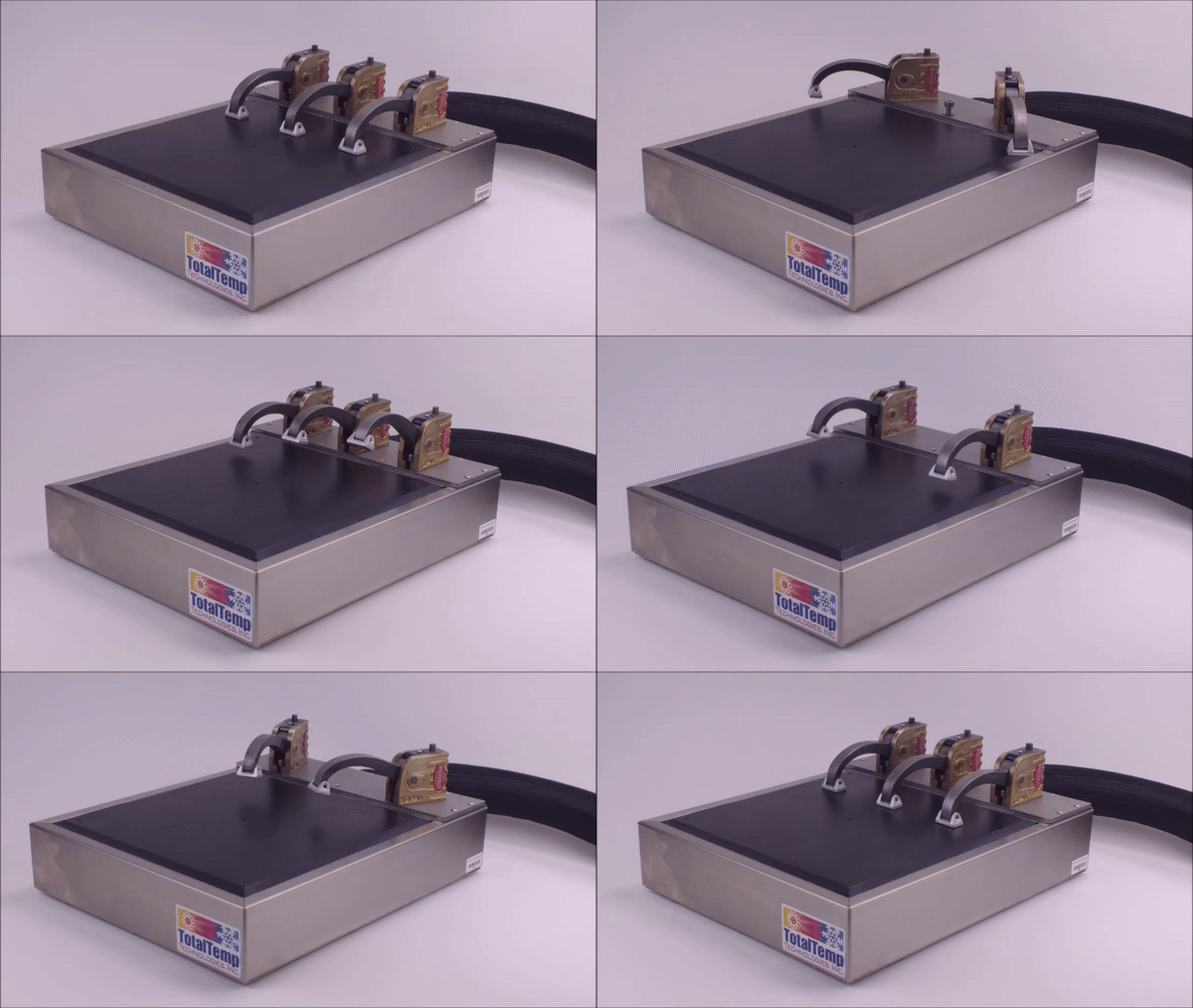
Custom features, No Problem – Heavy Duty Clamp set produces hundreds of pounds force.      

Stop by Booth 522 at the Del Mar Electronics Show TotalTemp with Wesource – World Equipment Source

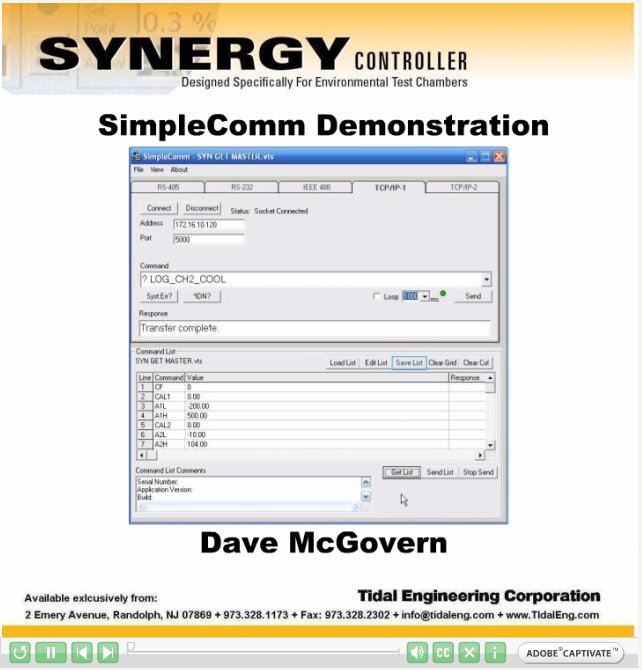
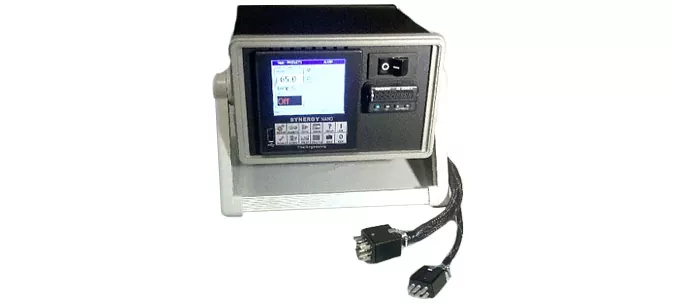
Getting started with remote communications and the Synergy Nano Controller is Simple! 


New Products:

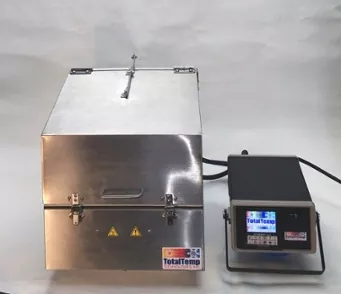
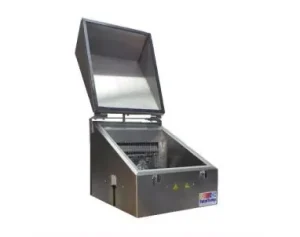
TotalTemp’s Hybrid Benchtop Chamber


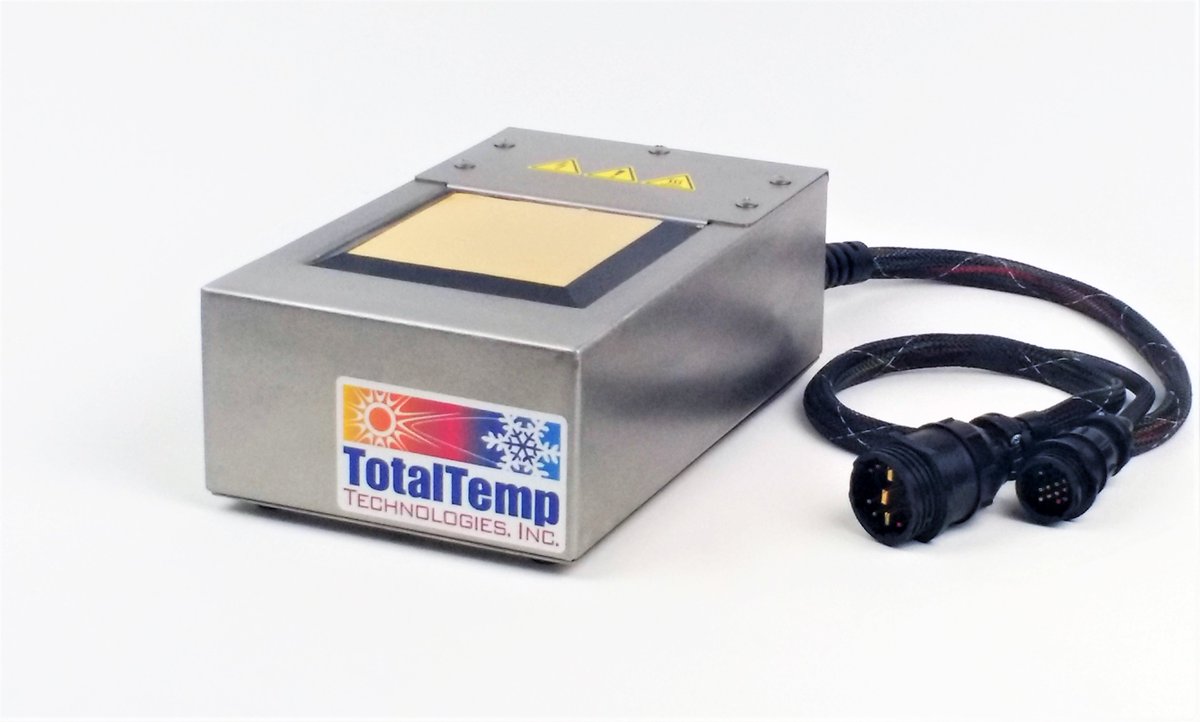
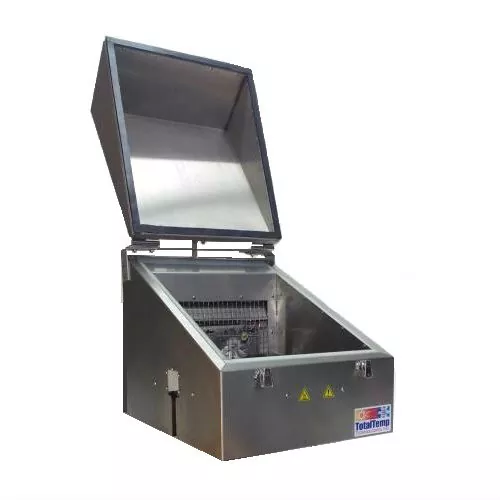
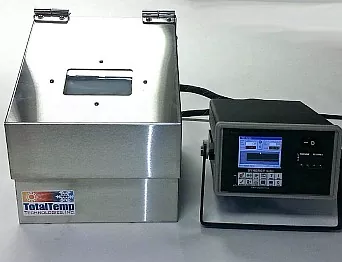
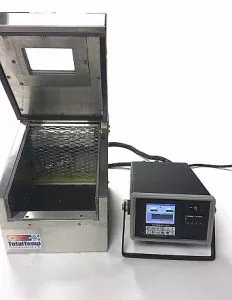
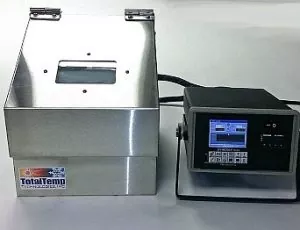
Is it a Chamber? Is it a Platform? It’s BOTH!: Recently unveiled at the IMS Symposium in May/2015, this is the first true Temperature Chamber/Platform combination called the Hybrid Benchtop Chamber. The floor of the chamber is a completely functioning Hot/Cold Plate, independent or simultaneous with the chamber.


TotalTemp Thermal Platform Integrated into Space Simulation Chamber


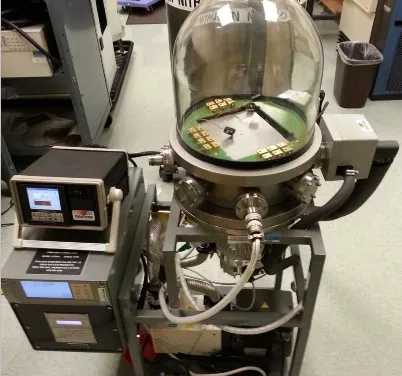
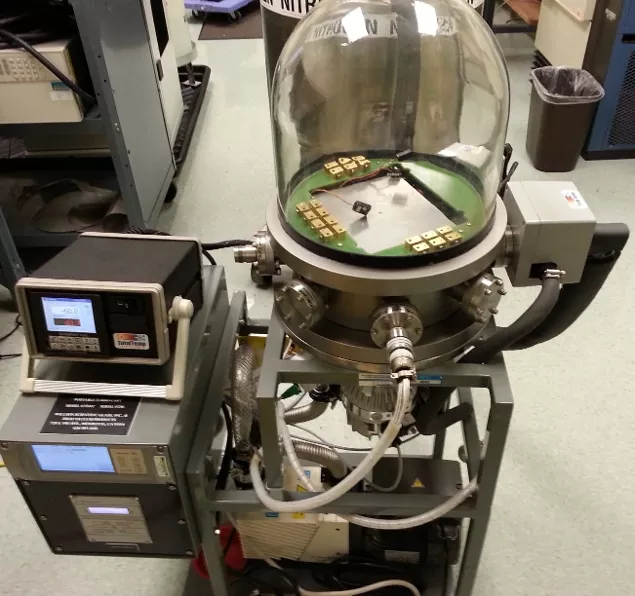
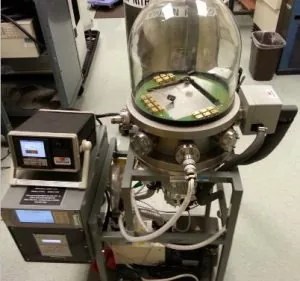
Specially configured Thermal Platform designed for heating and cooling through conduction while in a high altitude or vacuum environment. The TotalTemp Platform can be integrated into an existing vacuum chamber, as is shown in picture on left, or we can provide a complete turnkey system to solve your space simulation or other thermal vacuum challenges. https://www.totaltemptech.com/thermal-platform-vacuum-integrated-into-space-simulation-chamber/


The NEW Mechanically Refrigerated SC49


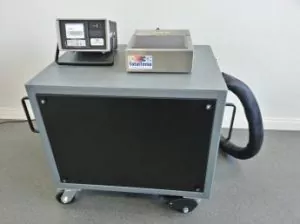
TotalTemp has recently completed development on a new standard model SC49 platform that is designed to fit the compressor cabinet remotely under the bench, with the platform on an 8′ umbilical allowing it to rest one the bench. This Mechanically Refrigerated Thermal Platform comes with these advantages:

  • Needs no expendable coolants
  • -40º C with single stage compressor
  • Optional one piece design that fits on most bench tops
  • Optional remote under bench configuration
  • Proven industry standard ultra-ultra-low temp refrigeration system


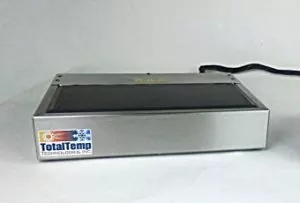
The NEW Standard Model SD98


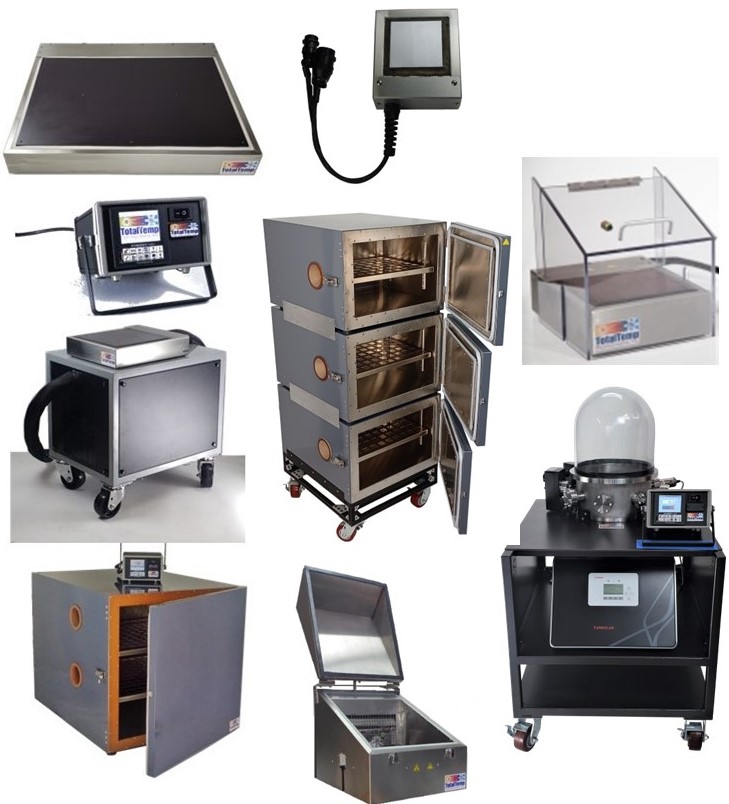
The Model SD98 Thermal Platform with a 6.5″ x 15″ usable surface area is a perfect example of how any of our standard platform sizes can easily be “doubled up” for other size configurations if more suitable for your application. In this case the 6.5” x 7.5” SD49 was built as a larger single zone plate, but in a double width configuration.


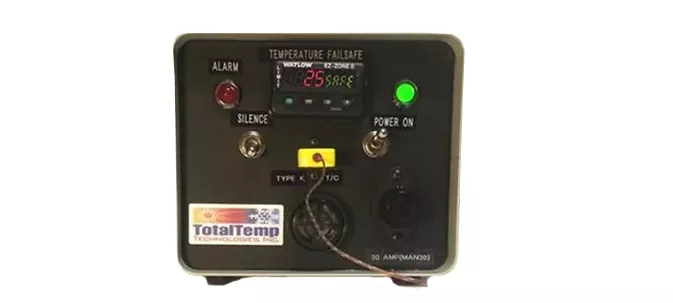
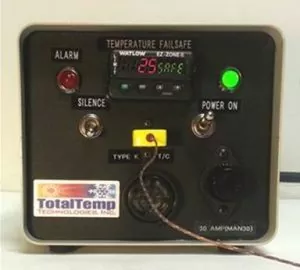
TotalTemp’s Independent & Retrofitable Hi/Low Precision Failsafe System


This system provides truly independent safety and security from any failsafe issues that might occur and can be retrofitted to most existing Thermal Platforms or Temperature Chambers. This unit is intended to supply power to and protect any temperature chamber, thermal platform or other thermal system from selectable ranges of extreme temperatures. Designed to be easily customized to meet your unique and specific needs.


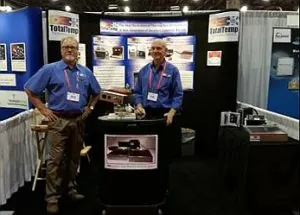
TotalTemp exhibited at the IMS 2015 Symposium in Phoenix, AZ in May


The TotalTemp Team had an excellent time at the IMS 2015 Symposium in Phoenix, AZ this last May 19-21. Many of you who visited our booth saw our latest NEW product, the Hybrid Benchtop Chamber. Thank you all for the very positive and encouraging feedback. This product is a keeper!
Announcing:

All our standard Thermal Platform models are now available with CE mark. TotalTemp has recently completed the CE certification process for our standard platform models so they can be made available to the European Community. The EU countries have been asking for an alternative platform, now they have it!

Coming soon:

  • New, larger size thermal platforms
  • Small benchtop temperature chambers.

Thermal conductivity: Compound, Sil-pad or nothing?

Thermal conductivity: Compound, Sil-pad or nothing?

Why use anything?   
Good thermal conductivity is important to the dissipation of unwanted heat from active power components and also important to the application of thermal platforms for testing electronics.

Perfectly flat, parallel and particle-free surfaces might show better thermal conductivity directly pressed together, however, some of the real-world realities generally prevent that best-case best performance. Here are a few reasons to use thermal grease:

  • Metal surfaces that appear to the eye to be perfectly flat, free of voids and parallel are usually are not.
  • Electronics like cleanliness, not all products can be built in clean rooms. A small unseen particle between two surfaces can easily prevent them from mating properly
  • Keeping even pressure on two surfaces is not always as easy as it might seem.  Keeping an appropriate amount of pressure on the two surfaces is important to transfer heat. Grease fills voids caused by uneven clamping pressure.

Thermal grease to the rescue?

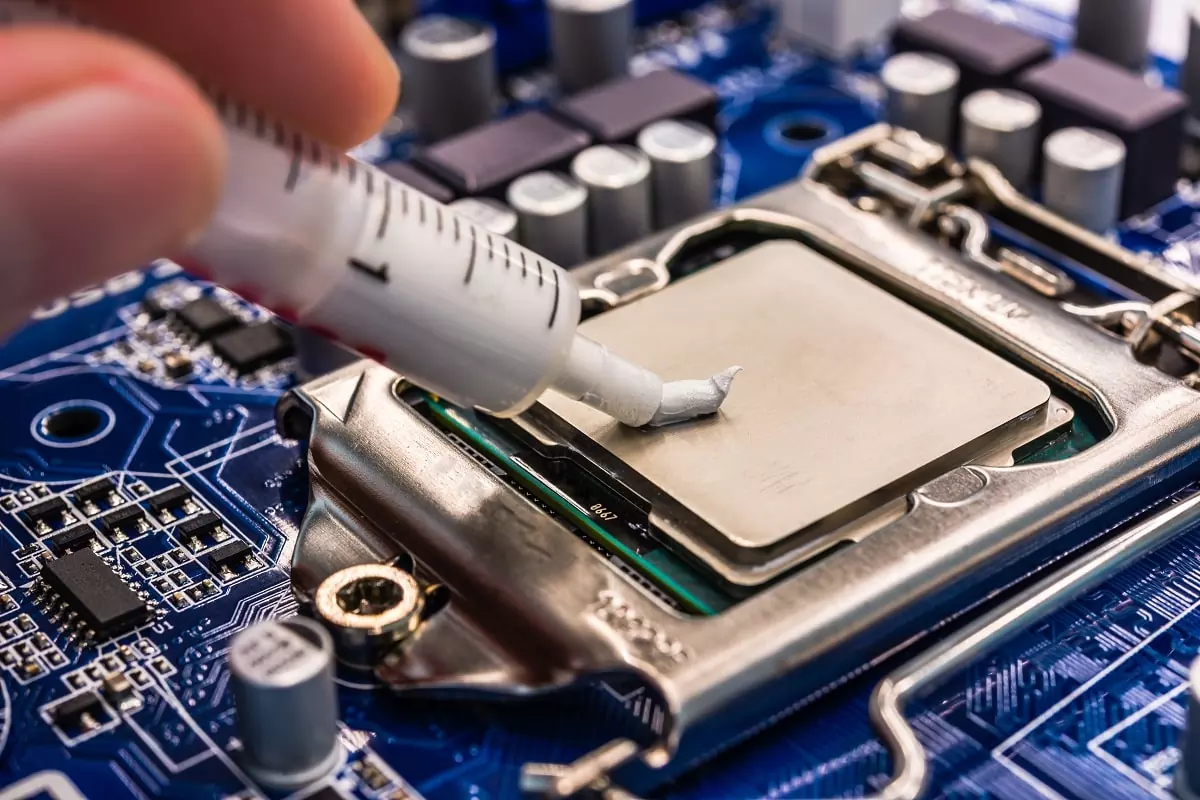
So – given that close enough to perfect flatness, cleanliness, and parallels is hard to achieve, thermal grease has been used for decades to improve the thermal conductivity between two metal surfaces. Much has been said lately in the world of competitive computing & overclockers about heat transfer thermal grease.  Generally, the most important point is less is better. There are articles and stories reporting varying levels of improvement in heat transfer from different grades of thermal transfer grease.  In general, what I have seen says that the quality of the grease can make some difference and the high-end stuff is expensive but generally far from proportionally better.  One youtube video even suggested Nutella, the food product that worked about as well as much thermal transfer product. Well, I’d say don’t try that but is interesting that it could work at all, even as a short-term solution. I am pretty sure over time it would shrink and prove corrosive to metals to mention a few. Properly applied thermal compounds should have little risk of making a mess over the rest of the electronics or in general. This is also a good time to note that often electrical conductivity doesn’t matter that much but depending on the application, some thermal compounds are specified to be electrically conductive and some are required to be insulating. clearly, you wouldn’t want unwanted electrical conductivity on a circuit assembly.

Silpads to the rescue from messy grease.

Silpads and similar products are pretty much what the name says, silicone-based pads used in lieu of grease and designed to be either electrically conductive or not based on the application. They compress slightly to fill in voids and are often reusable providing faster, more repeatable results. Silpads are a good solution for many heat transfer requirements.  Due to their generally thicker nature, they are generally slightly less thermally conductive than a very thin layer of thermal compound.  When it is important to maintain electrical isolation, they are often better than other alternatives.

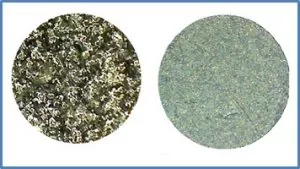
Actual “Flat” anodized aluminum surfaces at 200 X magnification

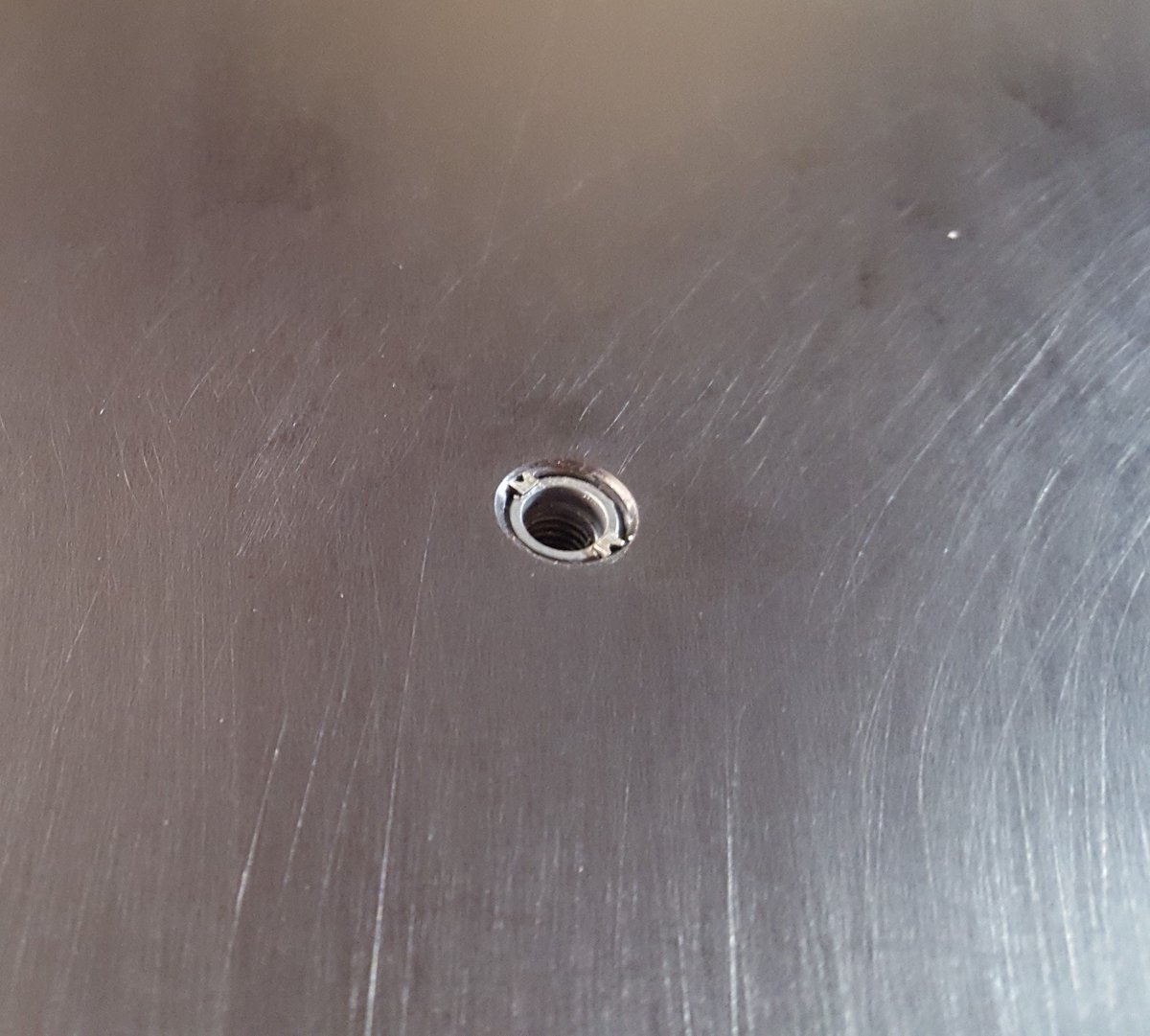
At 200x magnification, you can easily see that flat and smooth is really not flat and smooth. The one on the left might initially look and feel flat to the touch but in fact, it is not a good surface for thermal conductivity due to the voids.  This photo on the left is what the result would look like with a hard anodize treatment on cast aluminum (Cast metal generally has more voids).  Under a microscope the microscopic pitting is obvious.

The example on the right shows an acceptable surface for thermal conductivity however this is a view of a used thermal platform surface with a hard anodize that shows more true flatness as seen under the microscope but also shows minor wear scratches that can impede thermal conductivity.  A small area of missing material is not so significant but if a ridge or pockmark prevents full contact between the surfaces, it can greatly limit heat transfer.

If the surfaces can be lapped for improved flatness better thermal conductivity will clearly be achieved.

Keeping good, even force holding the surfaces together is the final note here.  It may seem obvious but in many cases, thermal conductivity is hampered by uneven pressure. Too much on one side or just not enough. More is usually better for better thermal conductivity with the limiting factors being most practical issues such as not distorting the surfaces which must have good contact.

CONCLUSION

Most surfaces are not as particle-free, flat, and parallel as they initially seem. A little thermal grease goes a long way to making for better conductivity, Silpads are less messy and also help cope with special needs such as electrical isolation and reusability but may have slightly lower heat transfer performance.  Use of thermal grease and silpads together is generally not recommended as you will end up with two layers between the surfaces. Finally don’t forget secure and even clamping.

That’s just the way it is done…

That’s just the way it is done…

Yes, we all have heard that or some similar version at least a few times over history.

…And understandably for many things. Clearly, when there is work to be done, there are benefits to following tried and tested methods that are known to produce expected good results.

It may be a cop-out for not taking time to explain or re-think the latest methods or it may be that there truly has been a lot of thought put in and a certain existing methodology really has merit above others.

Temperature testing in a chamber is “Just the way it is done”   That may be a good heuristic to follow, or not.

Methodologies change, occasionally rules of thumb do, but the laws of thermodynamics, not so.  Some technologies evolve pretty quickly when a new and better way is obvious.  CRT monitors, for example, made the exit quickly,  GPIB not so. That’s a whole separate story but there are valid arguments why some say ‘Viva GPIB‘.

So, to the point, we don’t foresee standard or custom temperature chambers ever exiting the scene. New methods do evolve. When you look at a large temperature chamber in the lab, you don’t have to think about an old tube monitor. Think instead of a more optimal solution. The Hybrid Benchtop Chamber can be thought of as an extension of the capabilities of either a temperature chamber or a thermal platform. Small chambers are more efficient, take up little space, and have the versatility to perform most thermal testing tasks right on the benchtop.

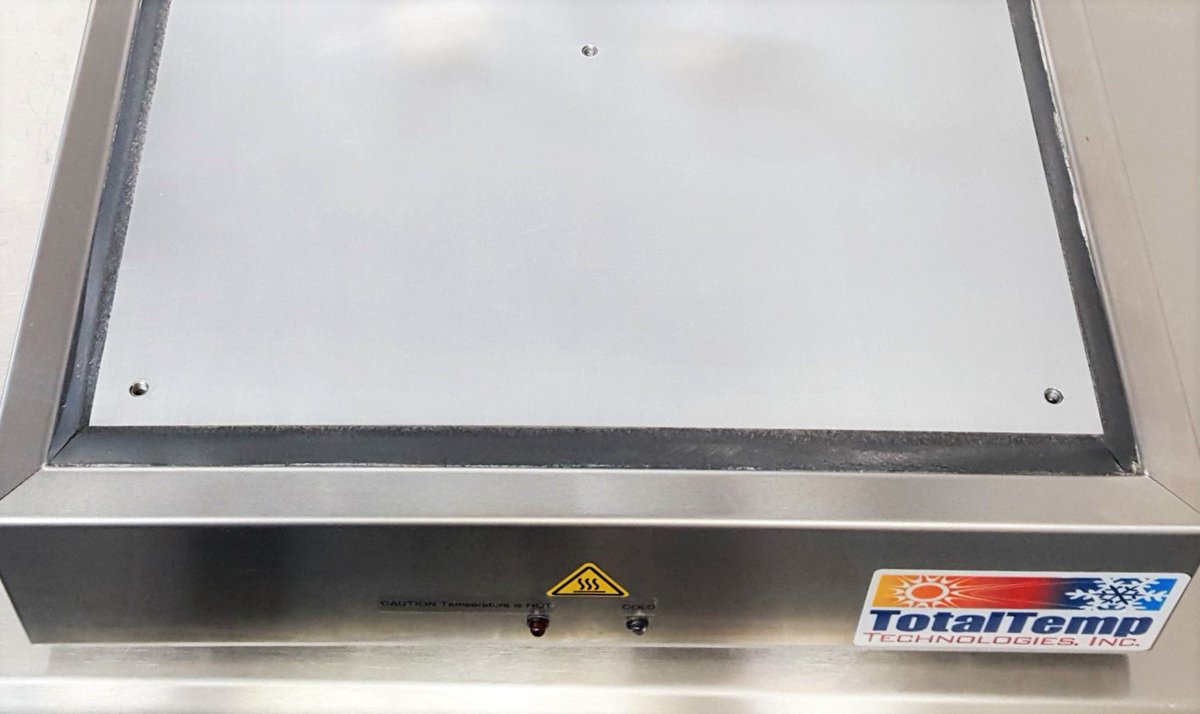
Thermal platforms (hot & cold plates) as an alternative to chambers can handily improve the speed of many thermal testing tasks, especially for testing devices that are more massive, with higher power dissipation and devices that have at least one flat conductive surface.

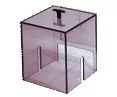
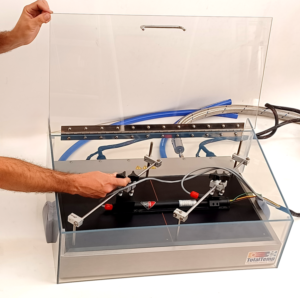
Especially when temperatures are not so extreme, some people will use thermal platforms with no cover at all.  A variety of Polycarbonate covers (shown below) are available that reduce condensation, corrosion plus keep temperature-shifting air currents away from devices under test.  A dry Nitrogen purge added to covers further reduces the effects of water condensation on the device while only minimally affecting the thermal performance.  One further step in thermal performance enhancement is to add the conditioning option to the purge system.  The purge gas is run through an extra heat exchanger in the platform as indicated here using arrows.

This simple solution gets the air temperature inside a cover close to the platform temperature which is very beneficial for reducing thermal gradients. Unfortunately, there will always be some gradient between the platform temperature and air temperature.  The Hybrid Benchtop Chamber optimizes the performance boost with greater airflow and the air temperature is actually controlled to the same or independent temperature from the platform.  Temperatures can be adjusted manually or with advanced temperature control algorithms to help get the whole device to the required temperature as quickly as practical or desired.

Combining convection and conduction to enhance thermal test performance is a big advantage when it comes to getting thermal testing done in a minimal amount of time. Below right HBC144N and below right is the HBC49N

Often cutting test times in half! At the same time, the Hybrid Benchtop chamber with Synergy Nano controller provides verification that one or several measurement points on the device actually achieved the required temperature profile.  PDF reports of results can be automatically printed directly to a network printer or FTP file destination.

The Hybrid Benchtop Chamber is a performance advancement of thermal platforms as well as an advancement in small benchtop chambers, combining the benefits of both.  It can even be retrofitted to existing Thermal Platforms.

And remember, If it turns out that the “Traditional way it is done” is the way it should be done, the chamber or platform can be used by itself as a small benchtop chamber or thermal platform.

Talk to us about your RF / Electronics / Power thermal testing requirements. We have qualified people here to answer your thermal testing questions.

Thermal Testing Results Delivered… to your printer

Thermal Testing Results Delivered… to your printer

Why is it important? 

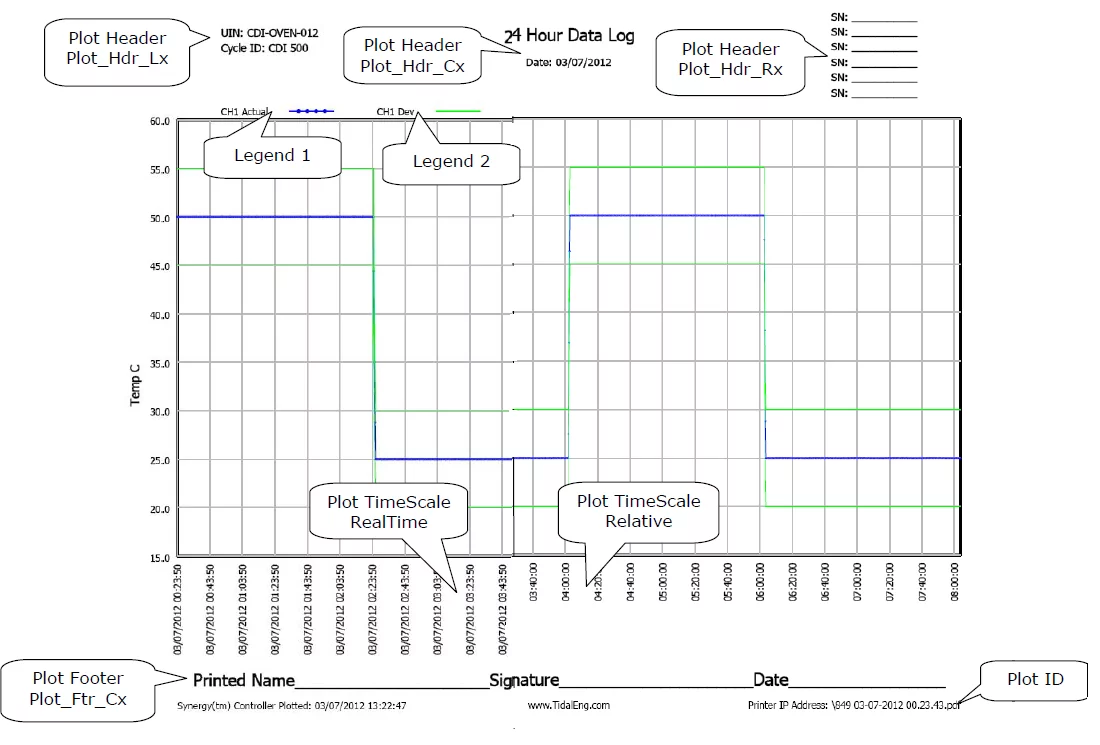
Product testing takes time and requires careful tracking of results.  Thermal Platforms and Hybrid Benchtop Chambers with the Synergy Nano controller not only speed the thermal processes but also automate plotted results while avoiding chances for error. Thus easily producing meaningful data.

How do I do that?

The Application Note at the link here demonstrates how easily printed results from the Synergy Nano Controller can be produced.

https://www.tidaleng.com/appnotes/SCAP90.pdf

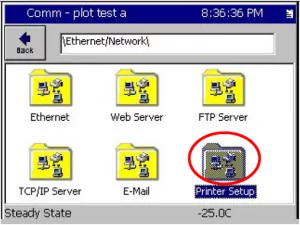
The temperature controller on these products can directly produce PDF files, email, or output directly to a network printer.

Automate your thermal testing with no-fuss printed results.

It clearly beats the old way

Wrapping it up

In addition to being a top-rated temperature controller with many other advanced features. These plotting features save time, produce fast and accurate documentation of your test results, via printer, PDF, email – or just viewed with a standard web browser.

It can communicate to any HPCL capable printer with an Ethernet port.

Contact TotalTemp or your local sales representative to find out more.

Synergy Nano Logging Function – Importing to Excel for Graphing

Synergy Nano Logging Function – Importing to Excel for Graphing

Manual graphing:

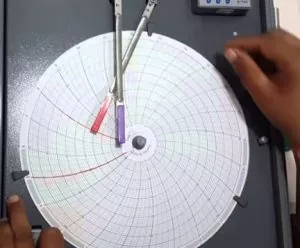
In the past, people used to use pen paper and a stopwatch to do manual graphing. Strip charts and circular chart recorders have come and are now gone. Separate logging gear is often expensive and cumbersome.

Now, when there is a need to graph simple logged temperature data, the Synergy Nano will help streamline the process.

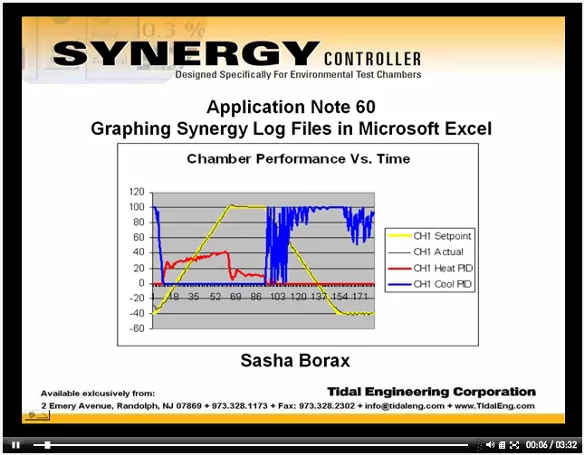
Here is a procedure by Sasha Borax on how to quickly produce graphical results in Excel from data logged by the Synergy Nano. Titles. selection of data to be logged and logging intervals is easy.

Graphing data from Synergy Logging function to Excel

Ask any questions.

We are here to help.

TotalTemp Thermal Platform Integrated into Space Simulation Chamber

TotalTemp Thermal Platform Integrated into Space Simulation Chamber

Specially configured Thermal Platform designed for heating and cooling through conduction while in a high altitude or vacuum environment. The TotalTemp Platform can be integrated into an existing vacuum chamber, as is shown in the picture on left, or we can provide a complete turnkey system to solve your space simulation or other thermal vacuum challenges. Click here for more information about Space Simulation Chamber.

Announcing

All our standard Thermal Platform models are now available with the CE mark. TotalTemp has recently completed the CE certification process for our standard platform models so they can be made available to the European Community. The EU countries have been asking for an alternative platform, now they have it!

Coming soon

  • New, larger size thermal platforms.
  • Small benchtop temperature chambers.

TotalTemp’s Independent & Retrofitable Hi/Low Precision Failsafe System

TotalTemp’s Independent & Retrofitable Hi/Low Precision Failsafe System

Precision Failsafe System

This system provides truly independent safety and security from any failsafe issues that might occur and can be retrofitted to most existing Thermal Platforms or Temperature Chambers. This unit is intended to supply power to and protect any temperature chamber, thermal platform, or other thermal systems from selectable ranges of extreme temperatures. Designed to be easily customized to meet your unique and specific needs.

Announcing:

All our standard Thermal Platform models are now available with the CE mark. TotalTemp has recently completed the CE certification process for our standard platform models so they can be made available to the European Community. The EU countries have been asking for an alternative platform, now they have it!

Coming soon:

  • New, larger size thermal platforms.
  • Small benchtop temperature chambers.

Thermal Stress Testing

Thermal Stress Testing

See Product Overview Page

A thermal Stress Test can mean a few slightly different things.

Thermal stress we are talking about here is a form of testing applied in the design phase or production of most electronic devices when reliability is important.  It often is combined with other stresses such as power-up, operation at the margins of power, humidity, vibration, etc.

Dual Zone SD144/288

1) in the generic form, Thermal Stress Testing is any testing process that is used to verify the functionality or reliability of a device over a specified temperature range, presumably equal to or slightly more severe than what would be the range of operation expected in the field.  Also, see HALT or HAST testing which can include test-to-failure or quality verification of devices.

2) Thermal Stress Testing also can refer to an especially high rate of change temperature testing.  Used for the purpose of verifying reliability, and functionality over a range of conditions equal to or more severe than what the device would be expected to survive in use.  High rates of change are often associated with testing for the cracking of parts or material bonds. The term thermal shock is used to indicate a rapid rate of temperature change. Test requirements dictate thermal shock tests to simulate actual conditions of operation or tests that are designed to determine at what point stress causes a failure, in some cases well beyond what the product would expect to endure in normal operation.

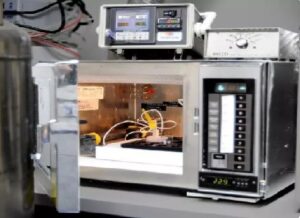
SD51 Cryogenic Microwave Processor

3) Thermal Stress Testing can also apply specifically to testing where a device has two different temperatures applied.  An example of this kind of testing might be to simulate the conditions of an automobile electronic engine module with a cold-climate startup condition.


HBC144-N

The new HBC144-N Hybrid Benchtop Chamber Combines Thermal Conduction and Convection
in one incredibly fast and efficient design.  A small benchtop chamber,  the floor of the chamber features a fully functional Hot/Cold Plate that can operate independently or simultaneously with the chamber.  Thermal platform are perfect for many types of Thermal Stress Testing.  Our standard thermal platforms can effectively perform rapid/repeated temperature cycling and verify at fast or slow rates as required.  The new Hybrid Benchtop chamber combines the gradient control of a temperature chamber with the speed and accessibility of a thermal platform.

This achieves better performance than either a chamber or platform alone. Hybrid benchtop chambers routinely cut thermal test times in half.

The Hybrid Benchtop Chamber also is especially capable of applying thermal stress of two different temperatures simultaneously applied to a device under test. For example, you can set the thermal platform to 150C and set the chamber above the platform to -40 to simulate the above-mentioned engine electronics cold-start conditions. Whatever your thermal stress test requirements are, TotalTemp can help you with the equipment to best meet your needs. Read more on the hybrid

In addition to the thermal performance of the HBC144-N, the Synergy Nano Temperature controller has advanced temperature control algorithms

that greatly enhance temperature testing speed and accuracy.  Automation features such as logging, remote control, web server, email status messaging, and network printing and can also save time and reduce errors over verification by manual methods.

Thermal Test Equipment, Fix it or Replace it?

Thermal Test Equipment, Fix it or Replace it?

The inevitability of Equipment Service | High-Performance Test Equipment

With the possible exception (almost!) of my old Honda S2000 most equipment, especially high-performance equipment will require service at some point. Relative to many other types of electronic test equipment, Temperature chambers, and thermal platforms have traditionally been remarkable for standing up to years or decades of grueling service while remaining reliable. In order of probability, I have seen the need for service to be

  1. Temperature controller fails or becomes obsolete.
  2. Compressor systems require service or.
  3. Cryogenic cooling solenoid valves eventually wear out.
  4. Everything else eventually.

New functionalities in automation and reporting seem impressive and may be worth the upgrade to something new but other than advances in Ethernet control there is not so much new I see on the front of test equipment or controller communication.  Many people have valid reasons for sticking with GPIB but after at least a decade of being sure GPIB is on the way out, it is still viable and we still support it. Modern serial to USB converters make it much easier now and cheaper to communicate with multiple instruments when the cost of GPIB is seen as prohibitive.

Repair costs, especially for on-site work are always painful. Fortunately, thermal platforms/controllers can generally be sent-in to vendors for service. Often a new controller is less expensive than a repair on old equipment. The goal frequently is just getting aging systems operational for minimal cost – be it repair or replacement. Sometimes the goal is “More brains” or higher performance is preferred.

In any case, TotalTemp offers new systems, repairs on competitive brands, retrofit controllers, or maintenance parts.

Call us or email us, we will take your call, and we have the experience and care to support your thermal testing needs.

Space Simulation with Small Portable System

Space Simulation with Small Portable System

Cost-Effective Space Simulation:

Space simulation adds another dimension to thermal testing.  In vacuum environments, heat is transferred by radiation or conduction since transfer by air currents (convection) is of course not possible without air. This is easily accomplished using thermal platforms in portable TVAC systems.

As is the case with temperature chambers, space simulation systems are often sized considerably larger than required due to a lack of knowledge of what future requirements will be. This results in several inefficiencies.

  • Portable space simulation equipment is cheaper to acquire
  • Smaller systems don’t take up as much valuable lab space to use and to store when not in use
  • Faster to pull down to vacuum and fast temperature transition times result in shorter test times required to perform tests
  • They are more efficient, using less power, generally not requiring special electrical services
  • Smaller systems are often more time-efficient as you are less likely to have to share with others. Larger systems often require travel, time-sharing, and waiting for a scheduled-use time

Conclusion:

Thermal platforms are a piece of natural test equipment for space simulation.

Consider TotalTemp Technologies thermal vacuum systems for full range testing:

Temperature range +150 to -75C. Vacuum 10-6 Torr.  For small to medium-sized devices. These thermal vacuum systems are flexible and fixture to meet many MIL-STD requirements.