Cascade Temperature Algorithm Demonstrates Thermal Testing Goals Reached

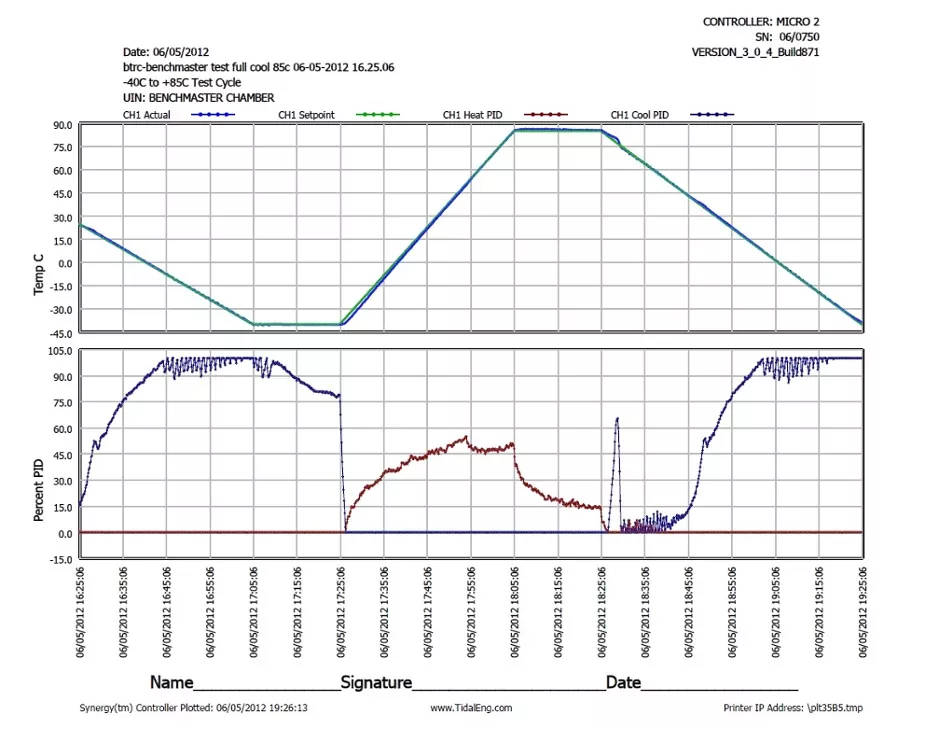
Cascade Temperature Algorithm Demonstrates Thermal Testing Goals Reached Faster with the Potential of Differential

Having a specific requirement to test a product to a given temperature profile, how does one show that the actual temperature requirements are being achieved?

Many times, there are parts of a device to be tested that have different heat capacities and also possible active load heat sources.  A single-point temperature control algorithm can have trouble effectively dealing with these variables. Additionally, while it may be tempting to say that a temperature setpoint has been achieved when the numbers on the display panel reach the desired value. – Without diving into the mathematics, being aware of a couple of the basic aspects of heat transfer help understand the problems at hand and achieve the best results:

1) Heat transfers more effectively when the heat source has a greater difference from the point of interest.

2) Convection heat transfer works a lot better when there is plenty of airflows. Truth is, many inexpensive temperature chambers have very low airflow. Air achieves the needed temperature fairly quickly but devices in the airflow, especially if they have any substantial mass or are in the shadow so to speak of another part will take a long time to reach the required temperature.

3) Heat transfer by conduction will always be faster.
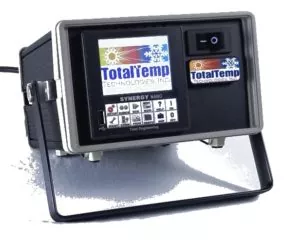
Many of the better modern temperature controllers now have the built-in capability to read two or more temperature probes. When you can identify a specific location in the part that is of special interest or proven to be a representative point that can be used to indicate that the temperature setpoint has been achieved, then Synergy Nano’s easy to use advanced temperature control algorithm can be used to improve the process as follows:

1) Allow temperature overshoot within specified limits to get the device to temperature more quickly (greater Temperature differential).

2) Verify when the temperature has been achieved removing unnecessary wait times.

3) Compensate for effects of active heat load, gradients, and latency in the device.

4) Provide recorded proof that proper testing has been done.
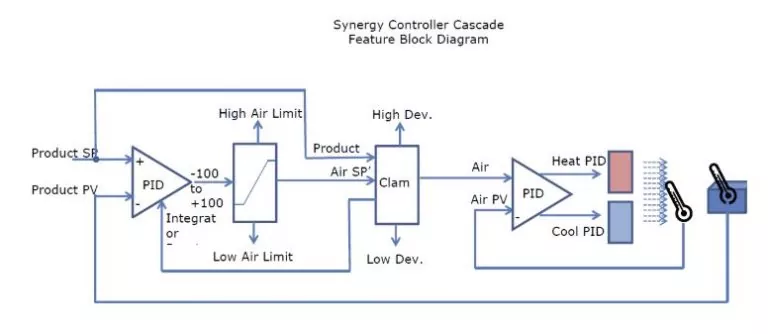
 

Advanced temperature control algorithms, now commonplace with better temperature controllers allow precise control of the Chamber or Thermal Platform temperature in order to get any specific location within the controlled zone to the required temperature. Active heat loads or areas that are somewhat thermally isolated from the heating/cooling source are also easily dealt with.  Direct access to a network printer or PDF makes a record of the completion of the temperature test as required without tedious data formatting.
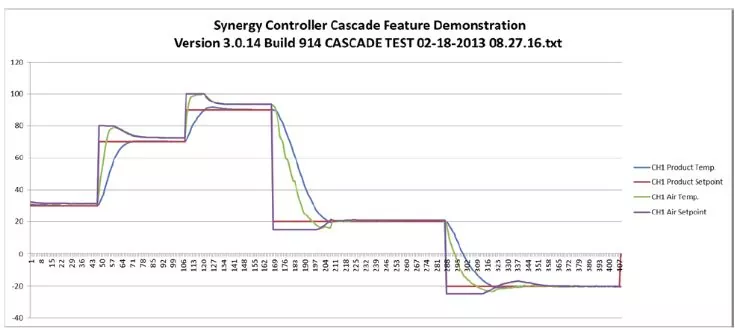
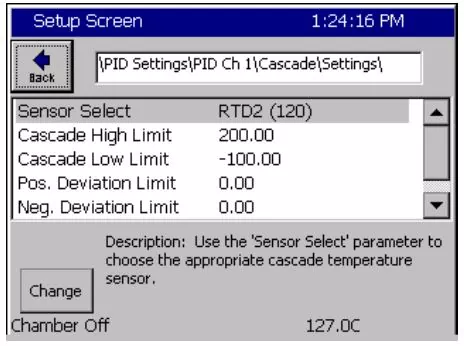
Parameter setting for DUT Temperature Control

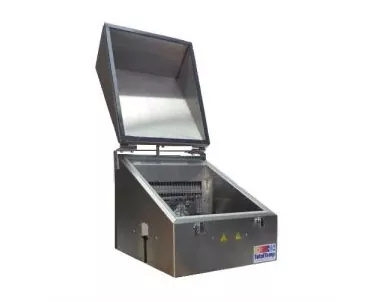
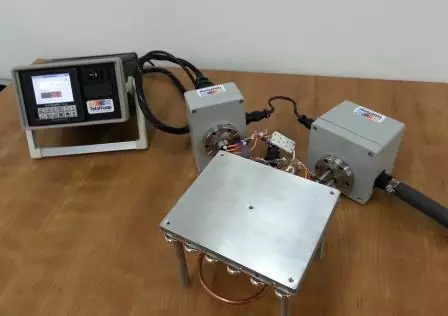
As an additional step for improving thermal testing productivity, our dual-mode Hybrid Benchtop Temperature Chamber allows faster and more effective thermal testing of devices regardless of different heat capacity and active loads.  It is simply a temperature chamber with both a thermal platform on the floor and a convection chamber. The Synergy Nano multi-zone temperature controller easily manages the temperature profile and reporting of results.
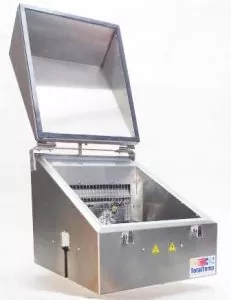
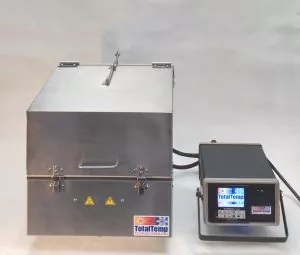
Hybrid Benchtop Temperature chambers

With this combination, customers report test times are actually cut in half.

Talk to the thermal experts at TotalTemp to find the best solution for your thermal testing needs.
How and When to Use Thermal Chambers for Testing

How and When to Use Thermal Chambers for Testing

Have you ever wondered what journey a piece of equipment or machinery took before ending up in space? Or what testing was done before the rocket’s blastoff? Or why does a piece of equipment fail prematurely? Well somewhere along the path to its final manufacturing, the components and sub-assemblies were developed and designed with the environmental conditions of where it would be operating in mind. Without this critical step in the manufacturing process, you would be far more likely to have some components fail prematurely (e.g. exposing a lithium-ion battery to extreme cold will reduce its longevity and storage capacity). By testing the component, you can ensure quality and reliability, and most importantly overall performance in the environment it is expected to work in. Quite frankly, that is just the way it is done. There are numerous ways to test a component for specific environmental conditions, one of them being the use of temperature or thermal chambers.

What is it?

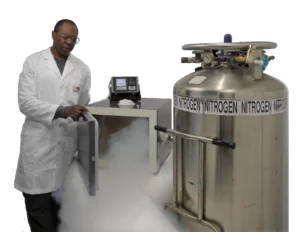
Temperature Chamber, also known as an environmental test chamber, performs thermal tests through the use of convection. They typically use a fan for the forced air convection, like a convection oven used in your house; however, instead of making cookies, you are testing products and equipment.

Not so fast

These “ovens” rely on the fans to move the air past the device under test for heat transfer. Therefore, if you want better performance you are going to need more airflow. Increasing the airflow comes at a cost since the unexpected heating from the air friction is significant. Also, more power is required for the test (e.g. operating costs go up) and then there will be increased noise and system wear as well.

Despite how easy (or complicated) it may be to bake a cake or grandma’s cookie recipe in a convection oven, the performance of a test within a Thermal Chamber is not that simple. In fact, there are at least three types of thermal testing that can be performed within a thermal chamber: Thermal cycling tests burn-in tests, and thermal shock tests. All three tests evaluate a component at different temperature extremes in a different way:

Thermal cycling is often a more controlled rate, alternating between the two temperature extremes. The speed of the transition can be adjusted to limit thermal stresses and allow guarantee of parts achieving the temperature.  There are hold times called soaks at specified temperatures to make sure the parts achieve the expected temperature. Faster ramp rates are usually better in production but on the other side, care must be taken to not stress the parts beyond what they are able to withstand.

Burn-in test is typically a sustained hold at a given temperature (usually hot) to verify operational parameters of a device in a specific environment over time, Thermal shock, on the other hand, is taking the component from one temperature extreme and another and “shocking” it with very rapid transitions. This is completed with testing chambers or thermal platforms that either automatically transfer the component being tested from one hot chamber to another nearby cold chamber or simply by using high-performance heaters and cooling in a single chamber zone. As you can see there is a little more to it than a convection cooking oven.

Another important thing that should be considered is meeting industry standards of testing. A lot has been written over time regarding appropriate environmental testing and most choices will depend on the intended destination for the product. There are some industry standards that are used as rules or guidelines for testing that can be adapted to other needs. The environmental chamber or thermal platform will allow you need to ensure it meets the standards of the application it will be used for.

For example, MIL-STD-810, Environmental Engineering Considerations and Laboratory Tests, was designed originally for products entering the defense industry; however, this standard is routinely used for commercial products too. This standard covers a wide range of environmental conditions such as thermal shock testing, exposure to high and low-temperature extremes, and humidity. Thus, depending on what environment your product will operate in there is a good chance you will be using MIL-STD-810 for environmental simulation in the design phase to ensure quality and reliability.

But that standard is just the tip of the iceberg. There are countless other standards (e.g. ASTM) whether or not they are related to the defense industry that require additional design specifications and testing. Therefore, if you want to ensure quality and reliability through an environmental simulation consider the best choice to be a temperature chamber to ensure first-time quality work of your product.

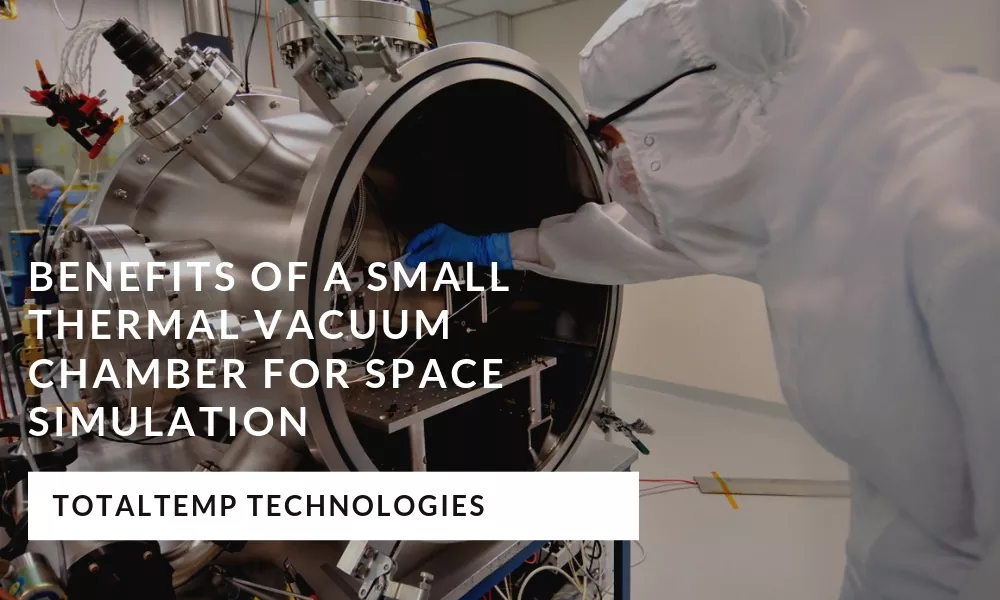
Benefits of a Small Thermal Vacuum Chamber for Space Simulation

Benefits of a Small Thermal Vacuum Chamber for Space Simulation

What is a small thermal vacuum chamber?

Thermal vacuum testing is a critical step in the design and qualification of space and flight components that are operating at high altitudes such as the mission-critical or sub-assembly components. It enables the component to be subject to space and upper atmospheric conditions – simultaneous altitude and temperature extremes. In a vacuum environment, heat is transferred through radiation or conduction since convection (transfer by air currents) is not possible without air. Thus, a thermal vacuum is a vacuum chamber that controls the temperature of the parts by conductive or radiant heat. This is easily accomplished with thermal platforms in smaller, portable systems.

Why Portable Space Simulation?

If you are testing or designing any high-altitude aircraft (e.g. spacecraft or aircraft) or anything leaving Earth’s atmosphere it’s important to consider thermal vacuum chamber testing to ensure your materials behave as designed. Unfortunately, space simulation systems are often sized remarkably larger than required due to a lack of foresight on what future requirements will be, This results in various inefficiencies. Thus, there are several cost-effective space simulation options; one of them being small thermal vacuum chambers.

A small portable space simulation chamber will meet the needs for testing many smaller components. The small size makes it more affordable and not something so expensive that you would need to take the devices to be tested to another facility at an hourly rate to perform testing. Pull downtimes for achieving vacuum are typically minutes instead of hours when using a small portable system. Likewise, temperature change rates are much faster.  Using the conductive nature of a thermal platform will always be faster than radiant methods typically used in larger chambers

Why use a TotalTemp Thermal Vacuum System?

If the above is enough to convince you that small thermal vacuum chambers are necessary, perhaps a couple more reasons:

  • Logging to file and direct Network printing/logging of test results
  • Easy Automation with the Synergy Nano controller
  • Quality and reliability from years of experience in the field
  • TotalTemp customer support is the best in the industry
  • Better temperature control with a thermal platform instead of by radiant temperature control methods.

If you are testing spacecraft or aircraft components or anything that operates at high altitudes or in space, it is highly recommended that you use Total Temp Technologies’ small thermal vacuum chamber for testing.

What is the Best Way to Accomplish Appropriate Thermal Test on an Electronic Device?

What is the Best Way to Accomplish Appropriate Thermal Test on an Electronic Device?

Why are Thermal Platforms a good alternative to traditional convection temperature chambers?

There are many reasons thermal testing on products is required.

Primarily to verify that the product will work properly in the environment (thermal and otherwise) that it is intended to perform. Sometimes, also to discover end-of-life issues for products, maximize performance or to weed out early failures that might result in product failures

For reasons primarily of simplicity and ease of use, the most widely employed method of forcing products to temperatures for thermal testing is a (convection based) temperature chamber.

According to laws of Thermodynamics, heat transfer (in and out of a product) is accomplished through one or more of the three following methods.  Conduction, convection and radiation.

Convection, as in a standard temperature chamber, while considerably less effective is often used exclusively for the testing of thermal environmental testing.  Technically speaking the heat transfer method is described as forced-convection or Advection (see equations there) where heat is transferred by circulating air past the source of heat and subsequently past the device under test.  Employing a temperature controller sensing the air temperature with a setpoint of the desired temperature, temperature stability at various points can be achieved.

For completeness, Radiation should be mentioned as well.  For most environmental testing applications other than thermal vacuum where convection or physical contact is not possible radiation is not the best choice. Temperature control by radiation is not as easily managed.

The typical scheme of thermal test by convection works well enough for many applications but some of the limitations of chambers are as follows:

  1. Additional instrumentation is required to sense the product temperature if you really want to be sure if-and-when the device reached the required temperature.
  2. Heat transfer via convection is much slower than heat transfer by conduction (see equations there) resulting in extended test times to assure actual device temperature.
  3. Active loads are less readily managed with convection, again resulting in uncertainty of actual device temperatures
  4. Benchtop chambers are often larger than needed for the specific application resulting in cascading inefficiencies of time, lab space, and utilities.

Thermal Platforms as an alternative to chambers brings fast test times and efficiency of lab provisions (space, HVAC load, maintenance, electricity, cryogenic fluids when required).  Platforms with advanced temperature algorithms can achieve temperatures quickly and efficiently by monitoring both the platform and device temperatures.

Thermal platforms have issues to be considered as well.  First of all, for the promised great improvement in heat transfer, good thermal contact is required.  Many electronic devices either already have a flat conductive surface or can be readily fixtured to provide a good thermal path to the device.  If that is not the case, a traditional convection temperature chamber or Hybrid Benchtop Chamber; that is one that combines the benefits of convection and convection to achieve greater performance may be in order.

Significant additional improvements of the processes of thermal test are achieved through proper application of easy to use automation features.  Advanced features such as control algorithms that can directly read the device temperature have been available for many years but are now made easier to implement with modern temperature controllers like the Synergy Nano controller.

Ease of use from a high quality instrument such as this allows numerous advantages including:

  • Logging to internal files, with multipoint sensors available
  • Log files can be exported to office software or printed directly to a network connected printer
  • Remote control via serial, Ethernet, FTP or optional GPIB with industry standard LabVIEW and other drivers included
  • Easy to use local programmability to make flexible ramp and dwell profiles that can be saved and copied.
  • Flexible alarms and notifications can be easily established to flag events, out of bounds condition or completion of test.  Email, text messages or local alarm notifications or actions
  • Selectable display can show multiple readouts, basic graphing and even control of two separate thermal zones


TotalTemp is happy help you find the best solution for your thermal testing requirements with helpful knowledgeable support staff.

Temperature Testing Practices

Temperature Testing Practices

Many items require thermal environmental testing. Items going through product development, requiring validation for high-reliability applications, and products exposed to extreme environments among others require specific thermal testing.

Diligent adherence to requirements results in performing a meaningful test and ultimately higher quality products as opposed to simply taking the easiest route to put a testing checkmark in the box.

A few important aspects of the testing can help ensure that best practices in thermal testing are followed to get real results from testing efforts.

    1. Testing can be time-consuming.  Properly applied automation will increase repeatability and can produce consistent results. Test results can be automatically stored on the test equipment, in the cloud, or automatically printed to a network printer.
    2. Automation also reduces some unexpected uncertainties in the testing such as reducing the temptation to open the door/lid of the chamber during the test.

      In addition to disturbing the temperature uniformity of the test, if cool air is introduced when the system is at extreme hot or cold temperatures, moist air can result in unwanted condensation or corrosion on the devices being tested.
    3. Best heat transfer will get the job done most effectively.  When possible conductive heat transfer will achieve the setpoint in less time with less energy.  When heat transfer by conduction is not possible or practical a convection chamber or a hybrid combining conduction and convection is a good idea.
    4. HBC144 Hybrid Benchtop Chamber

    5. When using a temperature chamber, for best heat transfer, be sure that airflow across the device is as great as possible to transfer heat effectively as possible.
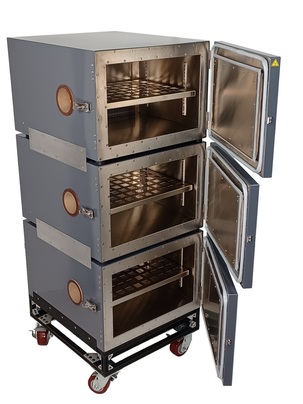
    6. Using shelves improves DUT gradients

      C460-N Triple Stack


    7. Use of a secondary sensor in a Temperature Chamber or Thermal Platform can be applied to either verify that critical zones in the product to be tested actually achieve the specified or with a controller that employs smarter temperature control algorithms which can consider both the system temperature and individual device under test (DUT) temperature.
    8. Prior to purchase, always give plenty of consideration to the most preferred cooling method given the testing requirements and facilities available.

    TotalTemp Technologies can guide you through all the trade-offs, including cooling methods. We not only design, manufacture and sell some of the best equipment out there but also offer free dedicated consulting to get you to the best thermal testing equipment that meet your unique requirements.

    Call us (888) 712-2228 or contact us if you have any questions.

The Basics of Environmental Test Chambers

The Basics of Environmental Test Chambers

Testing and studying new products is key to ensuring their safety, effectiveness, and applications. Since it isn’t always possible, safe, or efficient for that matter, to test products in their actual working environments, using these chambers is the best way to recreate its exact working conditions and measure the results. This is a process that has been in place for a number of decades and has been used effectively by the aerospace industry. Before truly grasping the complexities of this process, it is important to understand the basics.What are environmental test chambers?

Environmental test chambers allow a product to experience a variety of external factors to be tested in a controlled environment. As the factors are introduced, the unit and observer can see how the item being tested is affected in various conditions. Many times, levels of factors like vibration, temperature, electromagnetic radiation, humidity, pressure, sun, and salt exposure, among others, are applied singularly and then even layered to see how the specimens, products, or specific materials function under combined effects.

How are environmental test chambers designed?

Prior to being designed, the function of what will be tested is decided for each chamber. Chambers come in a variety of shapes and sizes, ranging from some that are large enough to drive in to and those that are small enough for only reach-in with special tools or robots. Depending on the purpose of your testing needs, you may require one that is floor-mounted, walk-in, bench-top, or even as grandiose as an entire room. No matter the size, the exterior of all of these are usually made with steel. The inner chamber can be customized depending on its application. Sometimes a glass window is installed, while other times, a reinforced steel door is necessary. The type of technology used is also dependent on its use. Some of the more recent models have web capabilities to upload test data, and many have touch-screen controls.

How are test chambers used?

Test chambers are used throughout many industries as a way to ensure the perfection of a product before it hits the market. Whether you are in the aerospace, cosmetics, pharmaceuticals, biotechnology, medical, technology, or packaging fields, you most likely use or order items that have gone through rigorous environmental test chamber protocols. They are also used for compliance testing purposes. International regulations may vary by country, and these chambers allow for testing the various conditions in one experiment. In aerospace, for example, these environments can be used to mimic conditions that would be present in high altitude or outer space. It would be too dangerous to take a chance with untested equipment, especially equipment that ensures continued life for astronauts. The test chambers can recreate similar conditions in terms of temperature, pressure, and oxygen levels. The product engineers may need to make tweaks or design improvements for safety and reliability by observing how the items react. Virtually every item you use in your everyday life has gone through a testing chamber in one regard or another.

What are the types of chambers available?

Some chambers are specifically created to test products while in their infancy or even research stage. Others are used on products to confirm viability and safety while they are being produced. Many organizations, for example, use ones that feature humidity/temperature chambers or stress/vibration chambers. There are quite a few types of chambers available that conduct important tests like the HASS, or Highly Accelerated Stress Screen, or HALT, Highly Accelerated Life Test. Picking the right one to recreate realistic conditions is required.

Overall, environmental test chambers are a critical component of the design and/or production process for many products and ideas. By testing products in their environmental conditions in a controlled manner, the researchers can ensure they are safe and adhere to standards, prior to being produced or distributed to the general public.

For more information on Thermal, Testing Equipment click on the link

Different Ways to Use Environmental Chambers

Different Ways to Use Environmental Chambers

Environmental chambers are used by many industries to help design the perfect products or confirm safety and compliance for ones that are slated to be mass-produced. For almost seven decades now, these chambers have been used to test all types of products from massive aerospace components to everyday consumer packaged goods.

Environmental chambers are an investment both monetarily and time-wise. Sometimes, companies may look to invest in a used chamber rather than a new one for cost savings. If you are going to move forward with any type of used equipment, do so with caution. You would definitely want to have it thoroughly inspected as your customers will be counting on you.  The control systems the most quickly.

Consider the time savings of having a modern reliable controller

1) Reducing the chances of a runaway condition

2) Reducing time investment required using a temperature controller with modern automation 

Features such as:

So, why are using these so necessary for a lot of organizations? It can be very expensive, and dangerous for that matter if products are not rigorously tested in realistic environmental conditions. The reactions to various types of conditions provide key data for further development, tweaks, and finalization before these products hit the market.

Though a multitude of products is tested in environmental chambers daily, there are three main ways in which these chambers are used:

  1. Reliability Evaluation
  2. Disintegration Timing
  3. Material Reactions

Reliability Evaluation

Chambers are often designed to have a variety of conditions they can emulate in a realistic manner to test how reliable the product will be. This testing can expose flaws in how the product is manufactured. Identifying weaknesses right out of the gate can save a great deal of capital in the end. As each tweak is made, the product can be re-tested until any flaws are eliminated.

Disintegration Timing

Environmental chambers can be used not only to test how strong a product is but also how long it takes to be destroyed. By raising the intensity of certain conditions like humidity or temperature, researchers can determine what the lifespan of the product is before it begins to deteriorate. These extreme conditions are certainly ones in which you would not want to try out a new product for the first time in real life.

Material Reactions

Understanding how not only your product reacts to various environmental factors, but also how its individual material components react may be key to its success. The chamber does not only have to test a completed project. It can test products in merely the design phase, or can even be used singularly for research purposes. Finding the sturdiest materials to build it from the ground up can help create a consistent and trustworthy product.

Environmental chambers come in a variety of shapes, sizes, and prices – from ones that are put a large vehicle in down to small table-top devices. There are even hand-held devices that can be transported easily for those who need to do testing on the go. They all are constructed to have different real-world environmental factors that they test. These can include temperature, humidity levels, vibration, photo-stability, and more. These chambers simulate virtually any condition you currently think exists in the real world. Plus, as technology has advanced, so have the testing units. Many now include digital data interfaces and touch screens.

If you’re considering creating a new product, it is important to really do your research and understand what protocols you will need to follow. Use environmental chambers to understand how reliable a product is, how long it will last and how well its individual materials hold up. Once you are armed with this information, you can feel confident in moving forward with your product and taking it into mass production (and the general comfortable will be confident in using it).

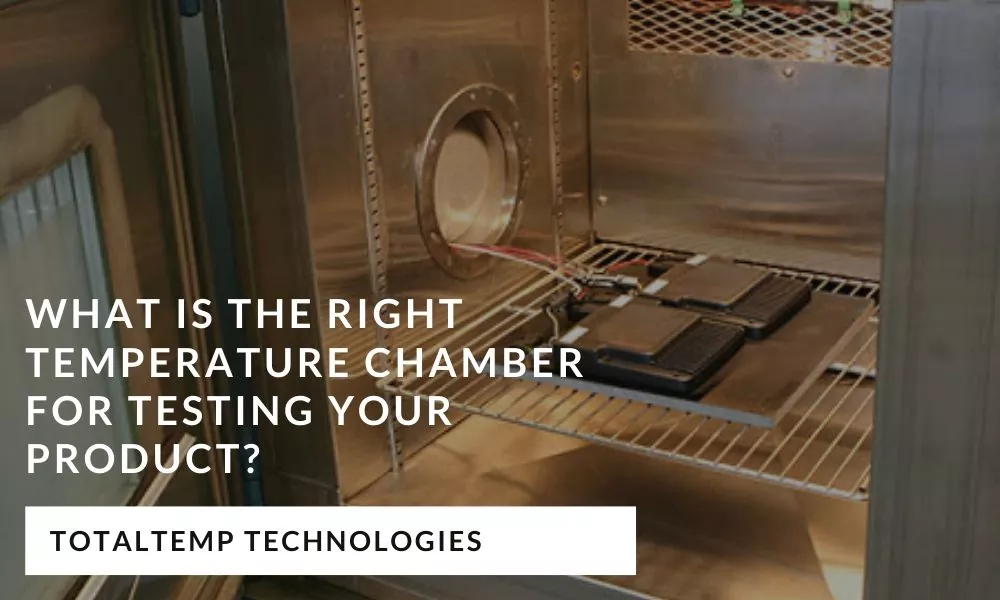
What is the right temperature chamber for testing your product?

What is the right temperature chamber for testing your product?

temperature chamber is an essential testing mechanism for testing materials, devices, and various components for strength and robustness enabling the product to carry out the desired purposes (see Different Ways to Use Environmental Chambers) here. The chamber can test to exceed environmental conditions. Wikipedia assures, “a robust climate chamber can mimic a relatively wide range of warm environmental conditions, in terms of temperature and humidity (1).

The thermal chamber, then, artificially replicates conditions through environmental simulation to which such products might likely be exposed (See The Basics of Environmental Test Chambers) here. The temperature chamber is also used to accelerate the effects of exposure in an environment, even at conditions not normally expected. Such testing assures a product’s structural integrity in real-world conditions and out worldly events.

Temperature chambers vary in size, presenting the user with the need to consider the best choice for the manufacturer’s demands. Thermal chambers range in size from large rooms to small benchtop structures. There are benefits to working with the benchtop temperature chambers over larger size structures; in order to make an informed decision, some important considerations are discussed below.

One benefit found with a benchtop size temperature chamber is in its small footprint. There is little or no reason whatsoever to purchase a chamber whose size exceeds the needs (and possibly the space) of the lab, particularly for operations with expected and predictable sizes in the products being tested. Lab space is a valuable commodity. This precious resource must be used strategically. Also, time is saved by eliminating technicians’ movements: less footprint and fewer footsteps.

There is also considerable benefit in saving time with a temperature chamber’s small configuration. The powerful yet compact thermal platform can, due to the nature of the mass, reach the desired temperature settings in less time than a larger version. In addition to saving time, the quicker process saves energy as well. Moreover, a clearer verification of exact temperature is readily and easily ensured.

As mentioned, less energy to replicate temperatures in a smaller space saves on cost. But another cost-saving benefit is derived from the simple fact that the chamber is small. The cost of a larger floor-based (or larger) vs bench model is comparable to the cost difference between a compact sedan and a double cab long bed truck. Each serves a purpose, and that purpose is more often than not attributed to cargo—the size of what is placed inside (See Benefits of a Small Thermal Vacuum Chamber for Space Simulation) here. Again, with predetermined size(s), the thermal chamber needn’t be overtly larger than demand-specific needs (2).

Less error and precise temperature control ensure conformity in repeated testing. This increases the repeatability requirements for consistent results, thus assuring that international and national standards are met.

Finally, the results of the thermal chamber’s tests can be automatically stored on the equipment, in the cloud, or transmitted straight to PDF or a network printer, eliminating the need for printing by technicians. Time saved is available for other important tasks.

Overall, the highest value testing conducted at any laboratory requires streamlined testing processes as much as possible to provide engineers and industry customers with their needed reports as fast as possible (3). Consider the needs for your product, the laboratory space required, energy consumption data, repeatability and consistency requirements, as well as ease of transmitting the resulting data. Given those parameters, you will certainly know the important factors that drive your decisions. Moreover, you may find that a compact benchtop model sufficiently and thoroughly fits your needs.

Thermal Vacuum Space Simulation Chamber

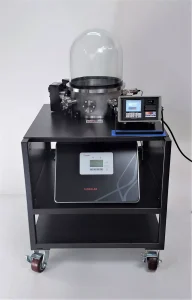
The Next Generation TotalTemp Thermal Vacuum, TVAC Chamber

The efficient advantages of thermal platforms are a natural for conductive heat transfer in high vacuum applications.  With all the new hardware going into space, where service calls are rare, thermal vacuum testing is important part of testing high altitude and satellite equipment.

70°C to +175°C, vacuum to 1×10⁻⁶ Torr

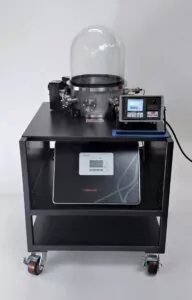
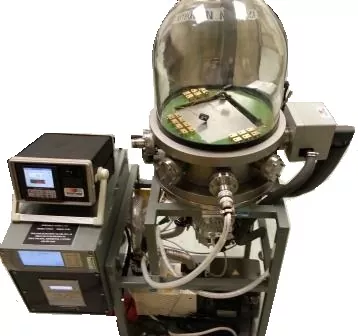
Affordable and configurable for your application.  Simultaneous high vacuum and thermal testing without renting time at a test lab.  Thermal platforms to fit your vacuum chamber or fully turn-key systems.  Platform shown inside bell jar is 6.5” x 7.5”, other sizes and different bell jars available.

  • 6.5″ x 7.5″ Usable surface area (49 sq. in / 315 sq. cm).
  • 12″ square or other sizes per your requirement
  • High Altitude or Space Simulation 1 x 10⁻⁶ Torr.
  • Temperature Range from -70°C to +175°C.
  • A typical coolant is Liquid Nitrogen.
  • Heated with embedded resistance heaters

TVAC Chambers for…

Aerospace environmental testing in a thermal vacuum chamber allows for the exposing and weeding out potential problems due to temperature extremes and change in or lack of atmospheric pressure as in space. With equipment destined for space, the stakes are much higher with the cost of a launch, chances of a failure could be catastrophic plus service calls in space have historically been very costly. The game of basic thermal testing in space is a little different than testing for land-based systems, mainly because the lack of heat transfer by air. The intentional and unintentional transfer of heat by convection makes a big difference from what could be common sense solution in an environment with air.

Outgassing of many materials would be another consideration that is not such a big deal on Earth but requires careful planning for items going into space. Making sure that components headed for space are going to perform as planned typically involves simulating the environment as it is expected to be experienced in space or low Earth orbit.  Standards for testing have been developed making success more predictable.  Standards such as:

  • MIL-STD-202
  • MIL-STD-810
  • RTCA/DO-160
  • ISO/AWI 15104, ECSS-Q-ST-70-02C


Prior to integration into larger systems, components and subsystems can be tested far more effectively in a smaller, portable thermal vacuum chamber.  Typically, larger thermal vacuum systems are only affordable by large institutions and time using them can be scheduled and rented as needed.  Not only is a small portable thermal vacuum system a more affordable option but the ability to have the capability on hand as required can be a big deal. A small thermal vacuum chamber will reach vacuum level and temperature much more quickly than a large chamber and pay for itself in efficiency, convenience, and accessibility.

Thermal Platform Integrated into Space Simulation Chamber

Cost-effective space simulation.


  • Portable space simulation equipment is cheaper to acquire
  • Smaller systems don’t take up as much valuable lab space to use and to store when not in use
  • Faster to pull down to vacuum and fast temperature transition times result in shorter test times required to perform tests
  • They are more efficient, using less power, generally not requiring special electrical services
  • Smaller systems are often more time-efficient as you are less likely to have to share with others. Larger systems often require travel, time-sharing, and waiting for a scheduled-use time


The TotalTemp Platform can be integrated into an existing vacuum chamber, as is shown in the picture above, or we can provide a complete turnkey system to solve your space simulation or other thermal vacuum challenges.

Custom Wide-Range Temperature Chambers

Custom Wide-Range Temperature Chambers


TotalTemp Technologies expands its offerings to include more products, including custom wide-range temperature chambers.

An environmental test chamber or temperature chamber is an enclosure used to test the effects of specified environmental conditions on electronic devices, components,  industrial products, or biological items – Chambers replicate the conditions they might be subjected to or determine properties in a specific environment. They are also used to accelerate the effects of exposure to an environment, life testing for example, or at environmental conditions not actually expected.

Such chambers are available for your specific application:

  • As a stand-alone test for environmental effects on test specimens.
  • High-performance models are designed to rapidly heat and cool with expendable coolants such as L-N2.
  • Custom configurations include hot-only, extended range, combined convection, and conduction or Boosted models which use both refrigeration systems and expendable cryogenic coolants.

At TotalTemp we offer several standard size models, each one customizable to meet your requirements. We specialize in providing an ideal solution for any industry or product to be tested, and configured for your specific needs, of course.

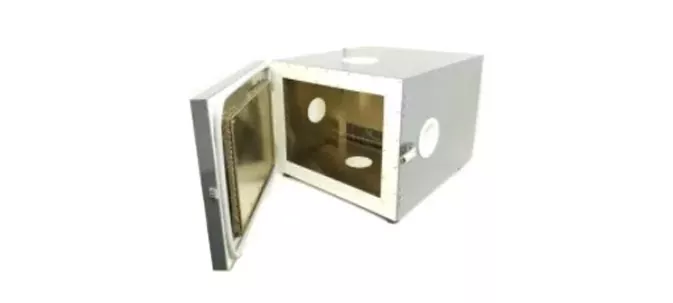
Featured in this article is the model C230 Temperature Chamber with custom apertures on four sides and a +325°C to -160°C temperature range. It includes features like:

  • Time-tested designs.
  • Award-winning synergy Nano temperature controller.
  • Alternate cooling methods

Meet your custom requirements in a better way than with off-the-shelf solutions. We give you two-year warranties and accessible, knowledgeable support before and after the sale.

TotalTemp Technologies

TotalTemp also offers a new product line of refrigerated custom Thermal Platforms and Temperature Chambers capable of -40°C and -70°C, without the need for expendable coolants.

TotalTemp Technologies, Inc

San Diego CA 92110 (888) 712-2228

www.TotalTempTech.com  sales@totaltemptech.com