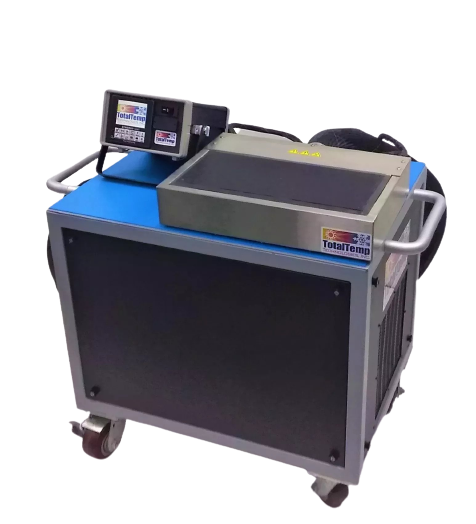
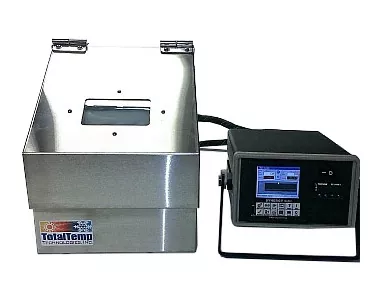
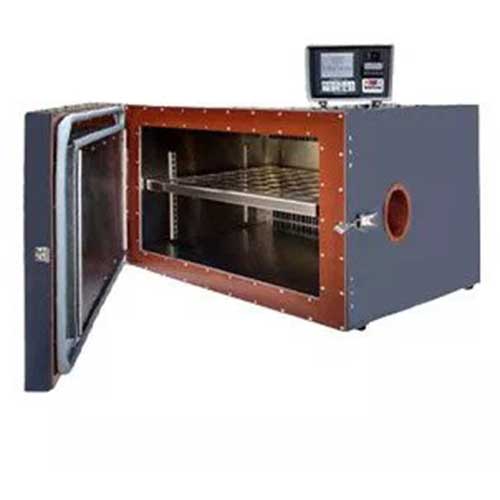
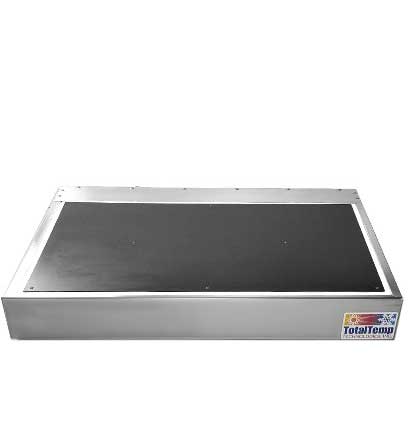
Model # SD288 | Cryogenically Cooled Thermal Platforms

Primary Features & Benefits:

  • 12 x 24 Inch surface, 288 square Inches
  • 610 x 610 mm surface, 1858 square centimeters
  • Low initial purchase cost
  • Excellent access to DUT
  • Energy-efficient temperature cycling
  • Extremely fast temperature transition rates
  • Hard anodized surface for durability
  • Small footprint for minimal impact on valuable bench space
  • High accuracy temperature sensors for precise control
  • Abundant heater arrangement for low surface gradients
  • Rugged Stainless Steel chassis
  • Threaded holes in all eight convenient locations are standard for adapter plate or clamp set mounting
  • Adapter plates available
  • Exclusively designed for easier serviceability, with full access panels
  • Certified products available


Product Data Sheet
 

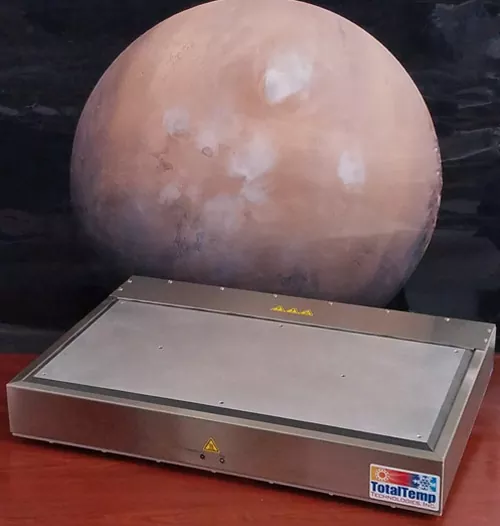
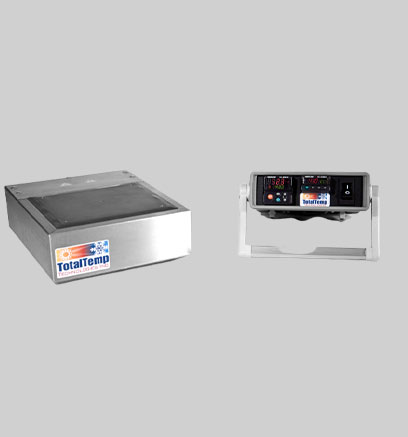
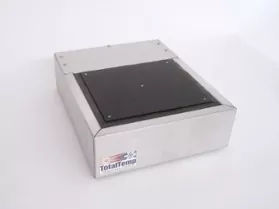
SD288 Shown with optional Conductive Surface and Programmed Blue and Red Safety LEDs

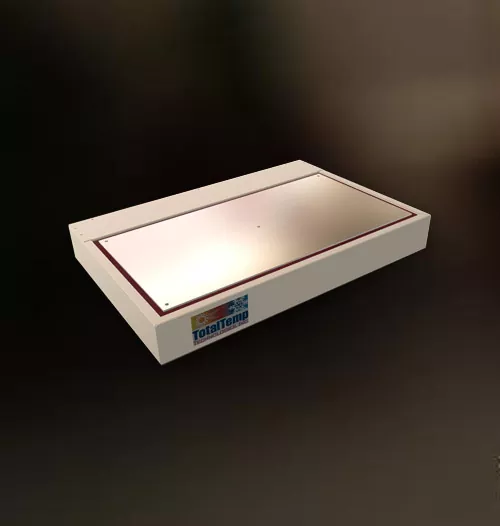
Prototype Rendering of the SD288

The Next Generation TotalTemp Cryogenically Cooled Thermal Platforms

Are specifically designed to deliver fast, efficient, and precisely controlled temperature conditioning to devices that have a flat thermally conductive surface. When using thermal conduction to condition the device at hot and/or cold temperatures, the results are much faster than using thermal convection, as used in environmental chambers. With a faster temperature cycling capacity, the result is a significant increase in production throughput. This not only saves time and money, but the smaller size of a platform over a chamber saves valuable floor and bench space while improving energy efficiency.

The new simpler cryogenic cooling channel concept provided by TotalTemp utilizes COTS technology that is proven and presently in use in diverse markets. Through the successful integration of an embedded copper tube cooling channel with a high-density arrangement of long-life durable AC cartridge heaters, TotalTemp provides a comprehensive system able to deliver hot and cold temperature cycling and conditioning on demand. With extremely accurate temperature uniformity and minimal thermal gradients at temperature, TTI has truly created “The Next Generation in Performance” at a price you can handle!

All TotalTemp cryogenically cooled products are designed to operate between -100°C (-100°C with L-N2, -65°C with L-CO2) and +200°C.

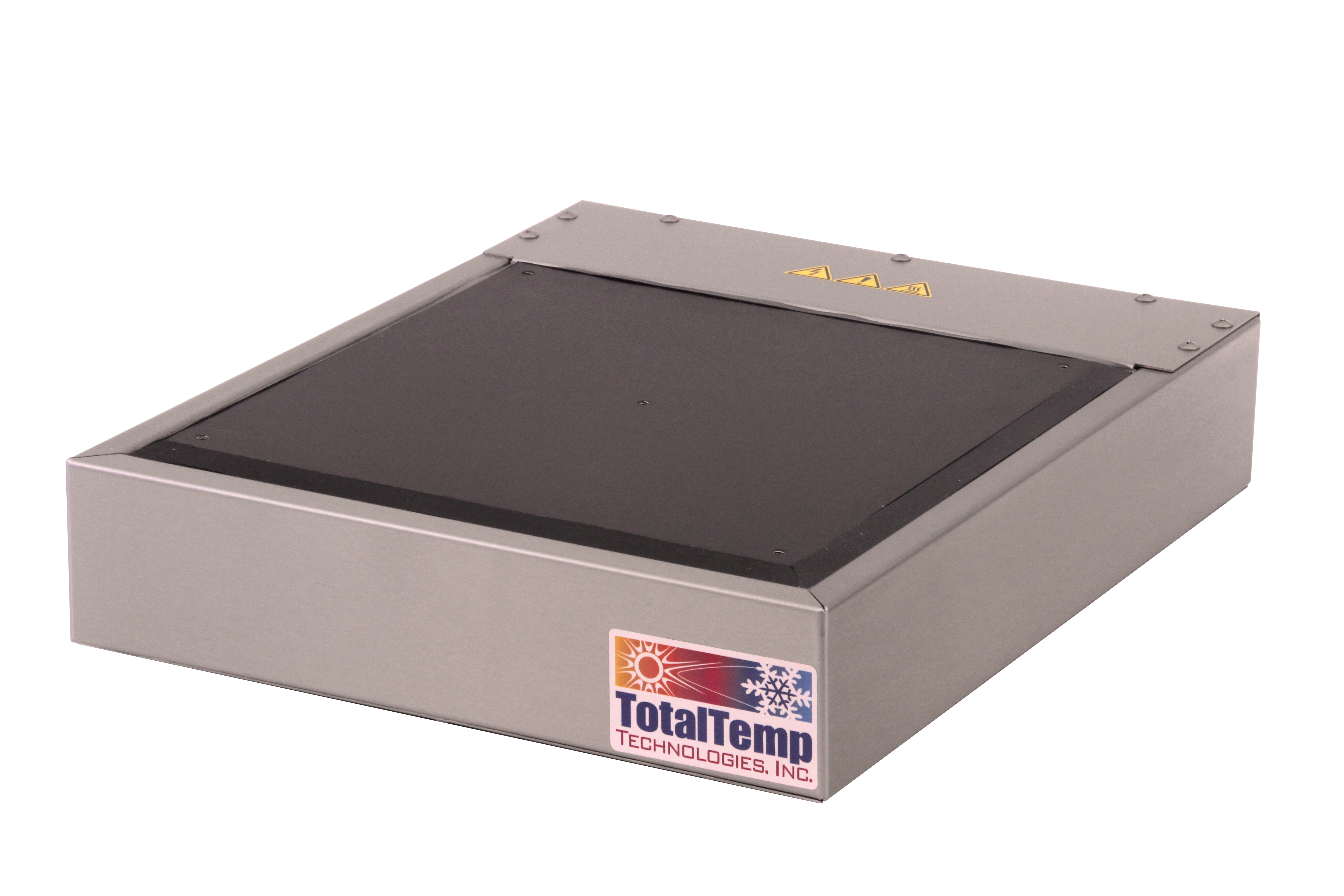
Model # SD144 | Cryogenically Cooled Thermal Platforms

Primary Features & Benefits:

  • 12 x 12 Inch surface, 144 square Inches
  • 305 x 305 mm surface, 929 square centimeters
  • Low initial purchase cost
  • Excellent access to DUT
  • Energy-efficient temperature cycling
  • Extremely fast temperature transition rates
  • Hard anodized surface for durability
  • Small footprint for minimal impact on valuable bench space
  • High accuracy temperature sensors for precise control
  • Abundant heater arrangement for low surface gradients
  • Rugged Stainless Steel chassis
  • Threaded holes in all four corners plus center are standard for adapter plate or clamp set mounting
  • Adapter plates available
  • Exclusively designed for easier serviceability, with full access panels
  • Certified products available

Product Data Sheet

The Next Generation TotalTemp Cryogenically Cooled Thermal Platforms

Are specifically designed to deliver fast, efficient, and precisely controlled temperature conditioning to devices that have a flat thermally conductive surface. When using thermal conduction to condition the device at hot and/or cold temperatures, the results are much faster than using thermal convection, as used in environmental chambers. With a faster temperature cycling capacity, the result is a significant increase in production throughput. This not only saves time and money, but the smaller size of a platform over a chamber saves valuable floor and bench space while improving energy efficiency.

The new simpler cryogenic cooling channel concept provided by TotalTemp utilizes COTS technology that is proven and presently in use in diverse markets. Through the successful integration of an embedded copper tube cooling channel with a high-density arrangement of long-life durable AC cartridge heaters, TotalTemp provides a comprehensive system able to deliver hot and cold temperature cycling and conditioning on demand. With extremely accurate temperature uniformity and minimal thermal gradients at temperature, TTI has truly created “The Next Generation in Performance” at a price you can handle!

All TotalTemp products are designed to operate between -100°C and +200°C (-100°C with L-N2, -65°C with L-CO2)

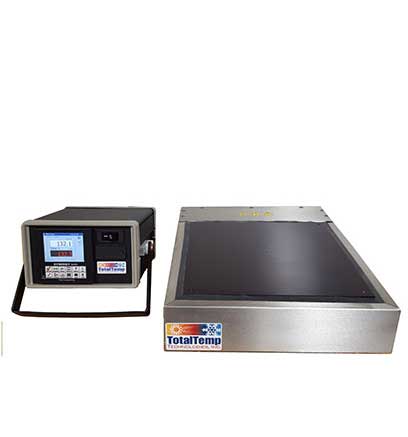
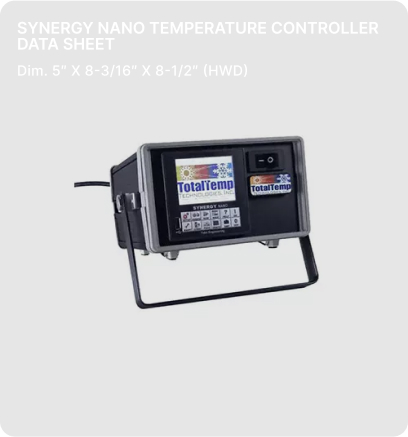
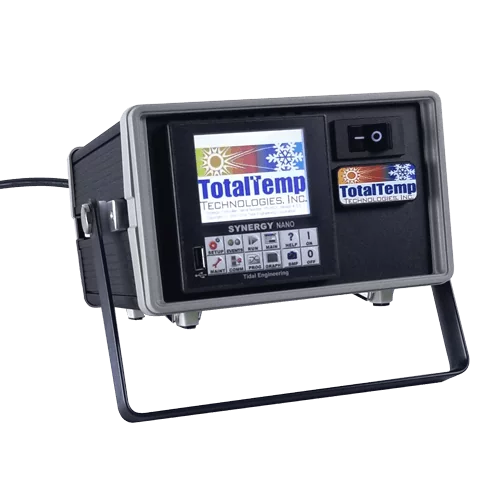
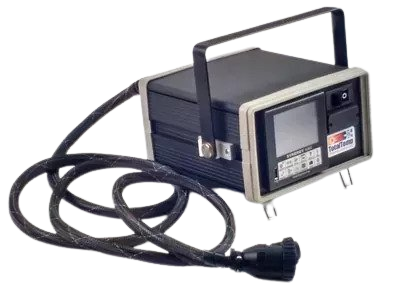
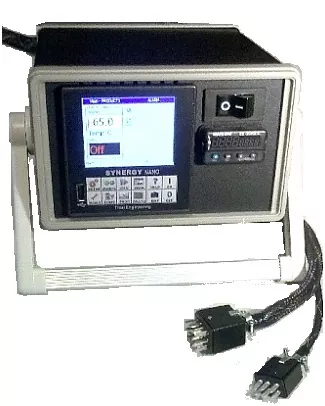
Synergy Nano Temperature Controller

Synergy Nano Temperature
Controller Data Sheet

Dim. 5″ x 8-3/16″ x 8-1/2″ (HWD)
With feet and tilt stand – 5-1/2″ x 10″ x 10″

temperature control

Primary Features & Benefits:

  • Color LCD touch screen – Easy to use, easy to read with graphing capability.
  • FTP server – Standardized communication protocol that allows controller files to be accessed from a web browser.
  • Remote Control via RS-232 or RS-485
  • Ethernet, 10/100 BaseT – Rapidly becoming the instrument control method of choice.
  • Thumb drive compatible – Convenient easy storage and downloading capability.
  • Telnet – An internet protocol over serial or USB that provides access to the command-line interface on a remote system.
  • 1 Gb internal storage, 64Mb SDRAM – Equates to abundant storage capacity.
  • One or two channels, flexible input configurations – Provides another advantage with the ability to use various types of temperature sensing probes, be it RTD (100 Ohm or 500 Ohm), or multiple types of Thermocouples.
  • Real-time clock – Always useful for tracking data.
  • Auto resume option – Selectable auto-resume behavior.
  • Built-in multiple configurable alarms – User-defined and adjustable to take appropriate action if processes or conditions get out of bounds.
  • Compact size – Saves that precious space on your benchtop or in your rack.
  • Application Notes further detail the features of the Synergy Nano

Synergy Nano Controllers in Action

The Next Generation TotalTemp Technologies Temperature Controllers

Efficient, fast, and accurate temperature cycling just got a lot easier. If you are ready to upgrade from the more limited control options of the other manufacturers, please read on.

These Controllers are ideal for use in when controlled environments are essential for the testing, screening, and calibration of mission-critical systems and components. Designed to take complete command of temperature conditioning systems, its logic circuits automatically select heating/cooling modes as required, totally controls programming of temperature, ramping, and dwell times as needed.

The Synergy Nano Controller employs a common user and programming interface and provides OEMs, test labs, and production facilities with cost-effective integration of control, logging, and connectivity features, and is appropriate for use in the broadest spectrum of environmental testing applications including temperature cycling and conditioning, thermal shock, and thermal vacuum testing processes.

The Synergy Nano Controller combines the functions of a temperature controller and a data logger. Moreover, it allows users to program up to six custom outputs for special applications and optional features. Process inputs include RTD, Thermocouple, voltage, and current. Boasting the Microsoft Windows™ CE.NET operating system, this stable, feature-rich system’s sophisticated communications capabilities also include built-in remote control/monitoring. The Synergy Nano Controller also easily retrofits into legacy equipment.

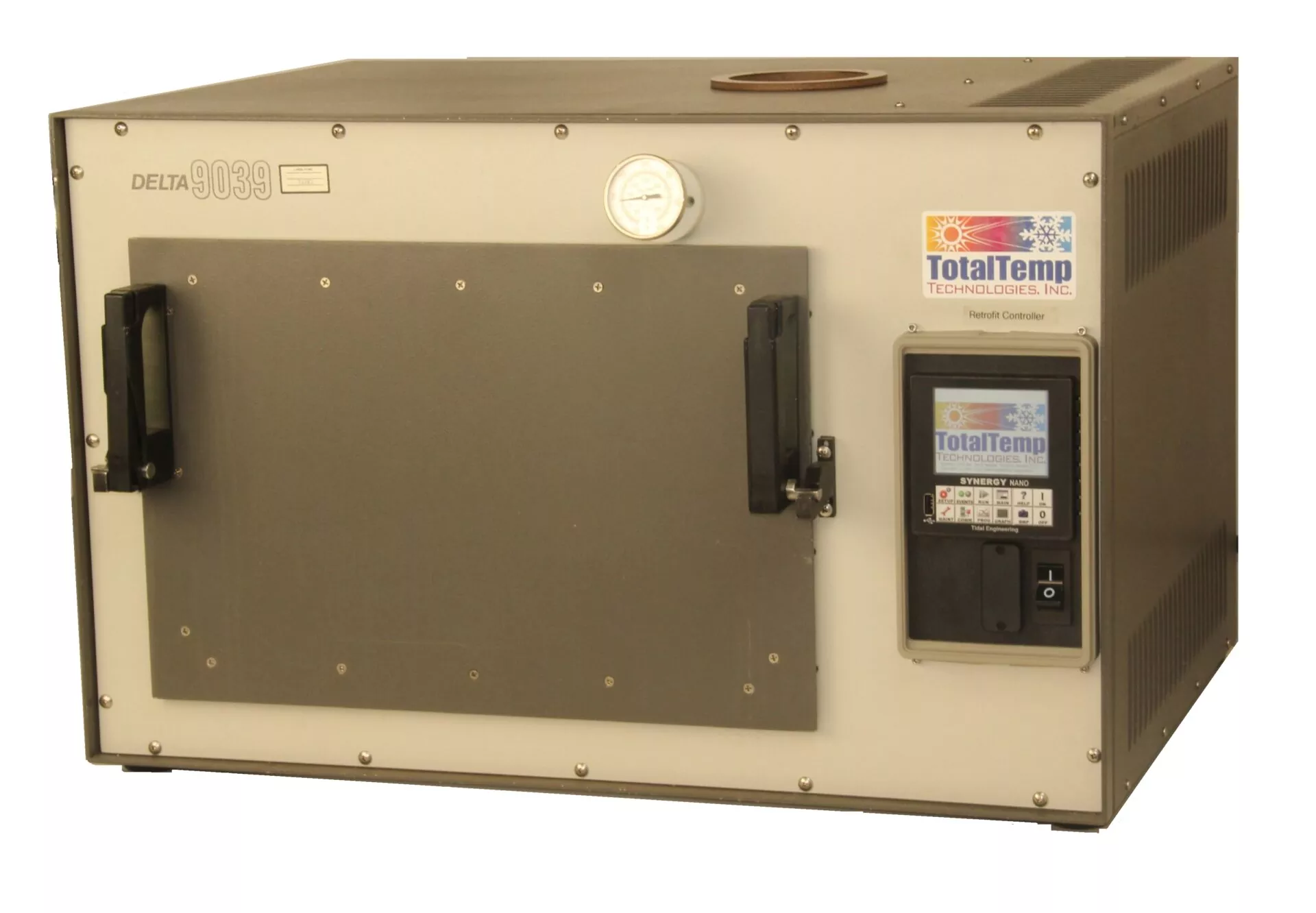
Retrofit versions available!

Finally sustainability for tired equipment. See Fix it or replace it for more on retrofit controllers for aging systems.

Remote Access

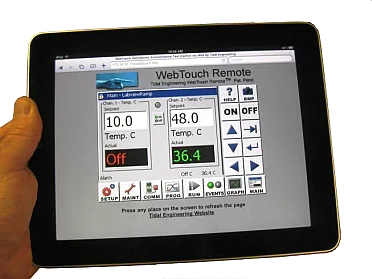
Remotely access Synergy Nano on any networked computer, even iPad.

WebTouch Remote software makes remote monitoring and controls easy.

Click HERE for a video demonstration.

The Synergy Family of Controllers

Now automatically plot test results to network printers and can e-mail PDF formatted plots, without a PC. These new optional features augment advanced controller capabilities like Web-based remote control, a 100 MB logging system, and the widest range of application support including temperature, humidity, altitude, HALT/HASS, thermal shock chambers, and thermal platforms.

Synergy Nano Controller Documents:

Synergy Nano Spec Sheet
Synergy Nano Full Technical Manual
Synergy Nano App Notes

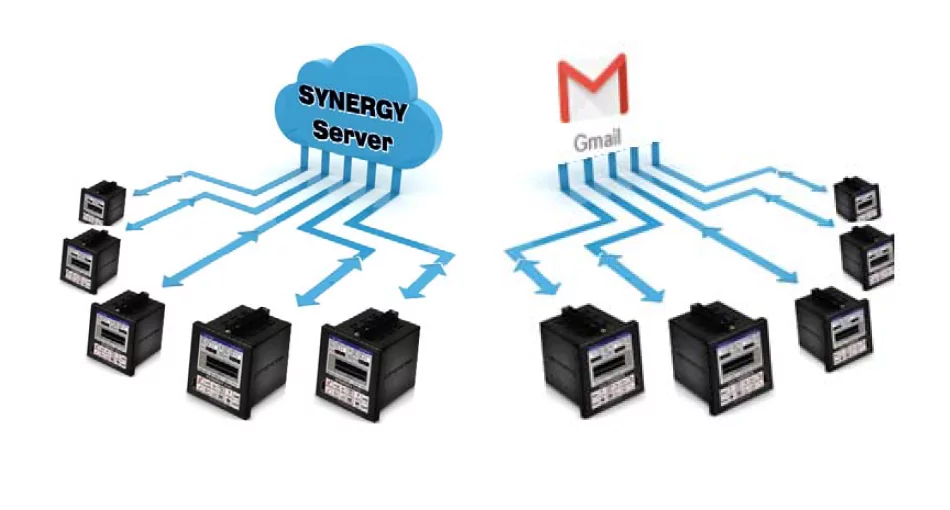
Supporting the effort to get product testing done correctly, repeatedly with consistently reported results, Synergy Server and available cloud storage technologies let you have your test data quickly and easily organized, with traceability.

The days of circle-chart recorders and hand plots are long gone, your test results can be reliably automatically stored. Reported to PDF, in email, directly to a network printer or to the Synergy Server. There is no need to file things by hand anymore

Cost savings, security, automation, accessibility, collaboration and recovery are all made easy with these features.

Cloud storage is quickly becoming the method of choice for Engineers and Managers who need to be responsible for test data.

Advanced Control Strategies for Thermal Testing

The Next Generation Thermal Test Performance | Company News

Typical thermal control for modern product testing uses a PID (Proportional, Integral,& Derivative) control algorithm to provide precise temperature control in changing environments.  Other algorithms can be equally successful but the PID algorithm is generally the most widely used.  Proper tuning of the temperature control algorithm requires some tradeoffs between fast response and precise control.

Proper adjustment of the setup parameters in the PID temperature control algorithm can make some of these need trade-offs.   This document is not so much about adjusting PID parameters, but more about starting with a good strategy.- So first… the control sensor must also be located in the optimum location to control well.  If there is a long lag between the time that the heat or cooling is turned on and when the sensor detects it, fast accurate control will not be possible.

You may never be able to achieve the desired temperature control if the temperature sensor is not properly located.  For the fastest response, the sensor should be fairly close to the driving heat and cool sources.  For temperature readings that most closely represent the temperatures of the device under test, the sensor should be located on or at least closer to the actual device.   Modern control algorithms can help with a best-of-both approach.

For many years algorithms have been used to improve accuracy and testing times with two or more sensors.   Algorithms based on a careful summation of two or more sensors or PID algorithms will often greatly improve thermal response.  By defining a measurement location of concern on the device under test, allowable overshoot of that point, and allowable overshoot of the driving thermal control source, the algorithms are known as cascade control can carefully apply heating and cooling to achieve setpoints quickly and accurately.

Cascade control graph is shown achieving product setpoint quickly without overshoot.

Cascade control is often pretty easy, once all is set up properly.  The algorithms will work well allowing the desired temperature to be achieved but in some cases, unexpected things can muck up the process.  Things like devices of unusual geometry, unusual heat conduction, or dissipation characteristics, required special test fixturing and other specific challenges.  Many of these obstacles can make appropriate sensing points difficult to determine or achieve.

Another alternative to consider is: Given the proper conditions and the understanding that simpler is often better, in some cases it is better to simply control strictly with a sensor at the device.  Generally, the conditions that make that work well are 1) Fairly low mass device  2) Minimal heat active dissipation  3) Fairly good heat path between heat source and device.  We work mainly with thermal platforms.  With platforms, a good heat path would mean good surface contact to the plate, minimal vertical geometry above the plate.  The control point in the platform corresponds to the airstream temperature for a chamber.  In most cases that don’t change unless the original design of the chamber or thermal platform is altered.  Adjustments to the PID algorithm (larger P term) may be necessary however to accommodate the longer thermal path to the sensor.

As a third alternative, sometimes a preferable solution to good control is to simply work around known latency and accuracy issues.   If time permits, waiting for a setpoint to be achieved may be preferable to driving systems with intentional overshoot.

When using a thermal platform alone, particularly without an active or passive enclosure (temperature conditioned airflow over the product)  there will always be some gradient between the sensor reading in the driving platform and the device on top of the platform.  The gradient is mostly due to unbendable laws of physics and also only minimally due to something short of best perfect / best practical thermal designs.  In a chamber, the device will usually eventually reach the air temperature unless it is actively producing heat.  In any event, most practical gradients are repeatable and predictable.  Sometimes it may be best to just specify the temperature accuracy desired, and do a few tests, empirically determine when the setpoint is within the acceptable range at the point(s) of interest and also if any offset is required to compensate for known gradients.   Initially more complicated but no further hardware or algorithm adjustments are required.

To bring the three discussed control strategies together for comparison with example photos of setups:

1) Generic  Control– at the platform (or air temperature for chambers).


Platform temperature is controlled by a probe embedded in the plate.
The device is directly on the platform surface.

Generic Control Strengths

Simplest, most straightforward general purpose applications

Generic Control Weaknesses

May result in slow or inaccurate results, possibly requiring user compensation by shifting setpoints or settling time rules.

2) Cascade Control- using two sensors to control better

The second Sensor with Cascade Algorithm helps compensate for thermal lag when the point of concern on the device is somewhat isolated from the driving source by a massive fixture or another thermal obstacle.

Cascade Control Strengths 

Smarter software helps achieve better & faster temperature control.

Cascade Control Weaknesses

More complicated, more difficult to set up, more things to go wrong.

Extra sensing hardware and software required.

3) Control only at Device

When the device and any fixturing between platform and device are not massive, good control can be achieved by strictly controlling from a point on the device.  Any gradients between platform and device are eliminated.

Device Control Strengths

Simple configuration,  Only the true temperature of the product is taken.

Device Control Weaknesses

It May require slowing down or detuning of the temperature control algorithm to prevent oscillations.

Extra safety measures might be recommended to prevent open loop heating/cooling if the sensor can be detached from the device.

The Tidal Engineering Synergy controller that TotalTemp Technologies uses can make the best of any of these three control strategies.  We support any and all of these strategies and are here to help with your temperature control and thermal testing requirements.
About Us:

The primary goal for TotalTemp is to maximize the combined 40 years of experience we have in this highly specialized field and create a new, alternative, “Next Generation” Thermal Platforms and Temperature Testing equipment. Our Mission is to offer thermal testing equipment that best suits our customers’ requirements. For several decades there were only two real manufacturers for thermal platforms. It was no secret that the market demanded a new alternative with better service and lower costs. We heard you loud and clear and TotalTemp is here to fill that need.

Next Generation TotalTemp Temperature Controllers

Temperature Chambers Environmental Test Chambers

Synergy Nano Programmable Temperature Controller

Primary Features & Benefits:

  • Color LCD touch screen – Easy to use, easy to read with graphing capability.
  • FTP server – Standardized communication protocol that allows controller files to be accessed from a web browser.
  • Remote Control via RS-232 or RS-485
  • Ethernet, 10/100 BaseT – Rapidly becoming the instrument control method of choice.
  • Thumb drive compatible – Convenient easy storage and downloading capability.
  • Telnet – An internet protocol over serial or USB that provides access to the command-line interface on a remote system.
  • 1 Gb internal storage, 64Mb SDRAM – Equates to abundant storage capacity.
  • One or two channels, flexible input configurations – Provides another advantage with the ability to use various types of temperature sensing probes, be it RTD (100 Ohm or 500 Ohm), or multiple types of Thermocouples.
  • Real-time clock – Always useful for tracking data.
  • Auto resume option – Selectable auto-resume behavior.
  • Compact size – Saves that precious space on your benchtop or in your rack.
  • Application Notes further detail the features of the Synergy Nano
  • Built-in multiple configurable alarms – User-defined and adjustable to take appropriate action if processes or conditions get out of bounds.
  • Synergy Nano Temperature Controller Data Sheet
  • Dim. 5″ x 8-3/16″ x 8-1/2″ (HWD)
  • With feet and tilt stand – 5-1/2″ x 10″ x 10″


Synergy Nano Controllers in Action


The Next Generation TotalTemp Technologies Temperature Controllers

Efficient, fast, and accurate temperature cycling just got a lot easier. If you are ready to upgrade from the more limited control options of the other manufacturers, please read on.

These Controllers are ideal for use in when controlled environments are essential for the testing, screening, and calibration of mission-critical systems and components. Designed to take complete command of temperature conditioning systems, its logic circuits automatically select heating/cooling modes as required, totally controls programming of temperature, ramping, and dwell times as needed.

The Synergy Nano Controller employs a common user and programming interface and provides OEMs, test labs, and production facilities with cost-effective integration of control, logging, and connectivity features, and is appropriate for use in the broadest spectrum of environmental testing applications including temperature cycling and conditioning, thermal shock, and thermal vacuum testing processes.

The Synergy Nano Controller combines the functions of a temperature controller and a data logger. Moreover, it allows users to program up to six custom outputs for special applications and optional features. Process inputs include RTD, Thermocouple, voltage, and current. Boasting the Microsoft Windows™ CE.NET operating system, this stable, feature-rich system’s sophisticated communications capabilities also include built-in remote control/monitoring. The Synergy Nano Controller also easily retrofits into legacy equipment.

Retrofit versions available!

Finally sustainability for tired equipment. See Fix it or replace it for more on retrofit controllers for aging systems.

Remote Access

Remotely access Synergy Nano on any networked computer, even iPad.

WebTouch Remote software makes remote monitoring and controls easy.

Click HERE for a video demonstration.

The Synergy Family of Controllers

Now automatically plot test results to network printers and can e-mail PDF formatted plots, without a PC. These new optional features augment advanced controller capabilities like Web-based remote control, a 100 MB logging system, and the widest range of application support including temperature, humidity, altitude, HALT/HASS, thermal shock chambers, and thermal platforms.

Synergy Nano Controller Documents:

Synergy Nano Spec Sheet
Synergy Nano Full Technical Manual
Synergy Nano App Notes

Supporting the effort to get product testing done correctly, repeatedly with consistently reported results, Synergy Server and available cloud storage technologies let you have your test data quickly and easily organized, with traceability.

The days of circle-chart recorders and hand plots are long gone, your test results can be reliably automatically stored. Reported to PDF, in email, directly to a network printer or to the Synergy Server. There is no need to file things by hand anymore

Cost savings, security, automation, accessibility, collaboration and recovery are all made easy with these features.

Cloud storage is quickly becoming the method of choice for Engineers and Managers who need to be responsible for test data.

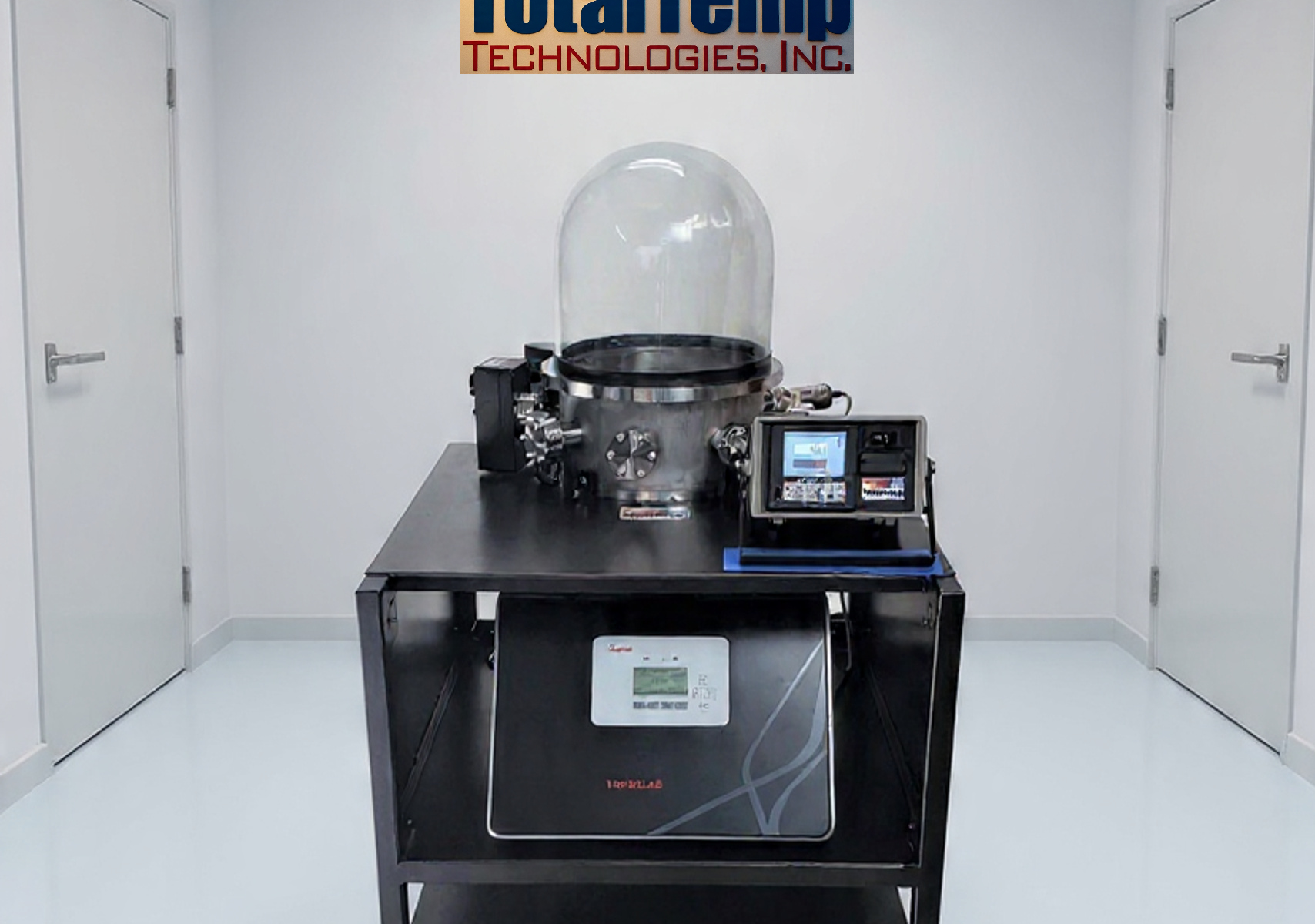
Thermal Vacuum Space Simulation Chamber

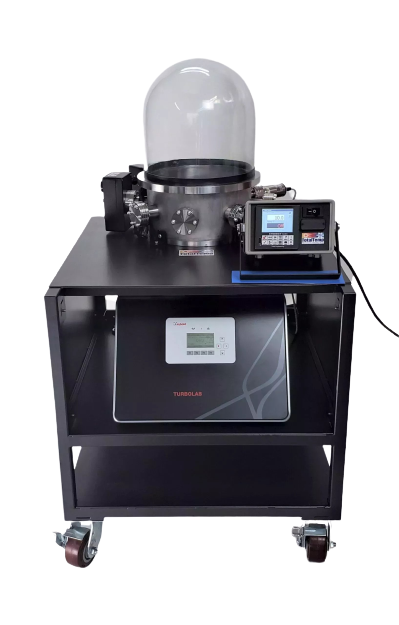
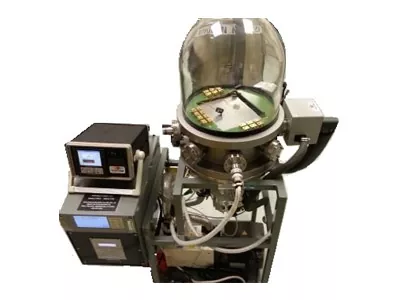
The Next Generation TotalTemp Thermal Vacuum, TVAC Chamber

Small, portable systems with conductive heat transfer allows for fast and efficient testing of small devices.


Primary Features & Benefits:
  • VmSD49-N has 6.5 x 7.5 inch usable surface area
  • VmSD49-N 49 square inches / 315 square centimeters
  • VmSD144-N is 12 x 12 inch usable surface area
  • VmSD144-N 144 square inches/ 929 Square centimeters
  • Custom sizes available
  • High Altitude or Space Simulation 1 x 10⁻⁶ Torr.
  • Temperature Range from -70°C to +175°C.
  • A typical coolant is Liquid Nitrogen.
  • Heated with embedded resistance heaters
  • VmSD49 Data Sheet
  • VmSD144 Data Sheet


See TotalTemp Blog February 2026:  “Space Demand Rising: Powering Up with Next-Gen TVAC Testing”


See TVAC Options:  “TVAC Options”

Mechanically Refrigerated Thermal Platforms

TotalTemp’s Mission is to provide better functionality and support to customers

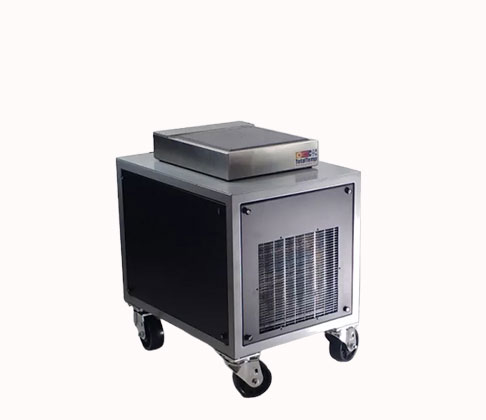
Mechanically Refrigerated Thermal Platforms for testing where Liquid Nitrogen is not practical. Several sizes are available. There are two different configurations with different lower temperature ranges. Single stage refrigeration systems designated SC are simpler and capable of temperatures as cold as -40°. Ultra cold systems are designated SCC. They have cascade refrigeration systems which are a little slower and more expensive but capable of temperatures at least as cold as -70°C. More information on types of mechanically cooled platforms.

Primary Features & Benefits:

  • Proven, industry-standard ultra-low temp refrigeration system.
  • An energy-efficient single-stage refrigeration system, capable of removing heat at -40°C.
  • A two-stage refrigeration system is as low as -70°C.
  • No L-N2 or L-CO2 tanks are needed.
  • Causes no Oxygen displacement.
  • Chassis Mounted Platform or benchtop with under bench remote refrigeration stand.
  • Optional Polycarbonate cover reduces condensation and frost (Standard or Low ESD).
  • Optional Dry Air or G-N2 purge systems available.
  • Consult Factory for colder temperatures.
  • Uses our popular premier Synergy Controller.

The Next Generation TotalTemp Temperature Controllers

Model SC -SCC144
Mechanically Refrigerated Thermal Platforms

Model # SD49 | Cryogenically Cooled Thermal Platforms

Primary Features & Benefits:

  • 6.5 x 7.5 Inch surface, 49 square Inches
  • 165 x 190 mm surface, 315 square centimeters
  • Low initial purchase cost
  • Excellent access to DUT
  • Energy-efficient temperature cycling
  • Extremely fast temperature transition rates
  • Hard anodized surface for durability
  • Small footprint for minimal impact on valuable bench space
  • High accuracy temperature sensors for precise control
  • Abundant heater arrangement for low surface gradients
  • Rugged Stainless Steel chassis
  • Threaded holes in all four corners plus center are standard for adapter plate or clamp set mounting
  • Adapter plates available
  • Exclusively designed for easier serviceability, with full access panels
  • Certified products available

Product Data Sheet

The Next Generation TotalTemp Cryogenically Cooled Thermal Platforms

Are specifically designed to deliver fast, efficient, and precisely controlled temperature conditioning to devices that have a flat thermally conductive surface. When using thermal conduction to condition the device at hot and/or cold temperatures, the results are much faster than using thermal convection, as used in environmental chambers. With a faster temperature cycling capacity, the result is a significant increase in production throughput. This not only saves time and money, but the smaller size of a platform over a chamber saves valuable floor and bench space while improving energy efficiency.

The new simpler cryogenic cooling channel concept provided by TotalTemp utilizes COTS technology that is proven and presently in use in diverse markets. Through the successful integration of an embedded copper tube cooling channel with a high-density arrangement of long-life durable AC cartridge heaters, TotalTemp provides a comprehensive system able to deliver hot and cold temperature cycling and conditioning on demand. With extremely accurate temperature uniformity and minimal thermal gradients at temperature, TTI has truly created “The Next Generation in Performance” at a price you can handle!

All TotalTemp products are designed to operate between -100°C (-100°C with L-N2, -65°C with L-CO2) and +200°C.