At the center of reliability engineering, are well‑designed temperature chambers. Every electronic assembly, sensor, material, or mechanical subsystem will eventually face stress from temperature variation, vibration, or other environmental conditions, making proper testing essential. Temperature Chambers recreate those stresses under controlled, repeatable condition, enabling early detection of structural, thermal, and material failures while accelerating verification and qualification testing.
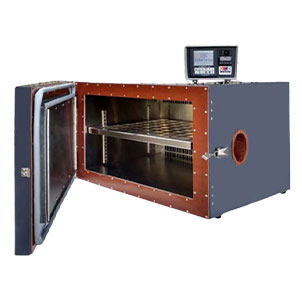
Chamber designs can differ significantly depending on the manufacturer’s approach. TotalTemp Technologies traditional temperature chambers are designed to be compact, high‑performance systems that deliver faster transitions, tighter gradients near and at setpoint, with more usable interior volume per square foot of lab space.
A chamber’s function is straightforward in concept: drive the device under test (DUT) through defined profiles with precision. In practice, achieving this requires a carefully engineered system that relies on optimized thermal management, integrating high performance insulation material, controlled airflow path, and responsive heating and cooling subsystems.
Thin stainless‑steel liners reduce thermal mass, which reduces thermal latency and keeps gradients extremely tight at setpoint.
A high‑pressure airflow path directs air across the DUT shelf for direct impingement, maximizing heat transfer and maintaining ultra‑low gradients so the DUT experiences a uniform thermal environment at setpoint.
Below the shelf, diffused air is pulled into the return path behind the plenum, where it is reconditioned by:
This balanced airflow prevents stratification and maintains uniformity throughout the chamber. Standards for compliance requires tight uniformity, especially for aerospace, automotive, and electronics qualifications.
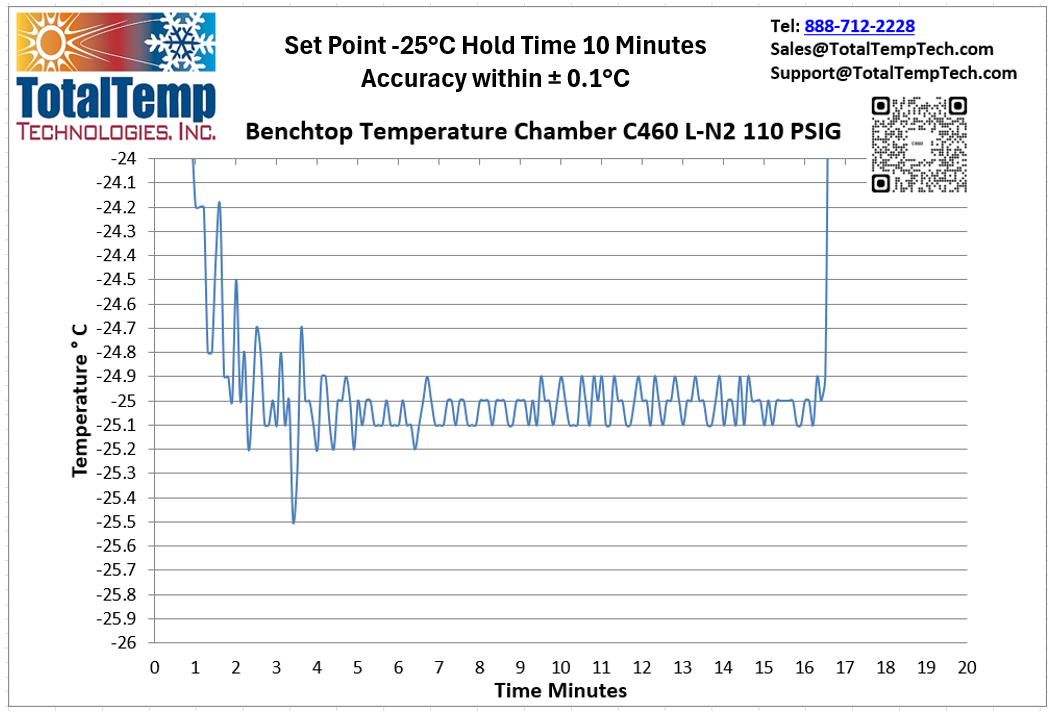
Liquid nitrogen is powerful and capable of driving temperature changes at more than 1°C per second even at modest pressures.
TotalTemp meters LN₂ into the low‑pressure zone, allowing proper expansion and mixing, preventing cold spots, poor mixing, excessive overshoot and thermal gradients at setpoint.
Injector placement is key to maintaining gaseous cold Nitrogen expanding into the air flow and preventing liquid phase Nitrogen from coming into contact directly with the device under test. This ensures reliable, stable, and uniform low‑temperature performance.
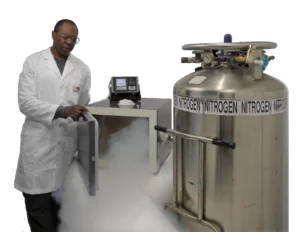
TotalTemp’s design philosophy compact size with maximum internal space, high grade insulation allows thin walls, low‑latency liners, minimizing heat paths, optimized airflow, and intelligent cryogenic or refrigeration integration ensures:
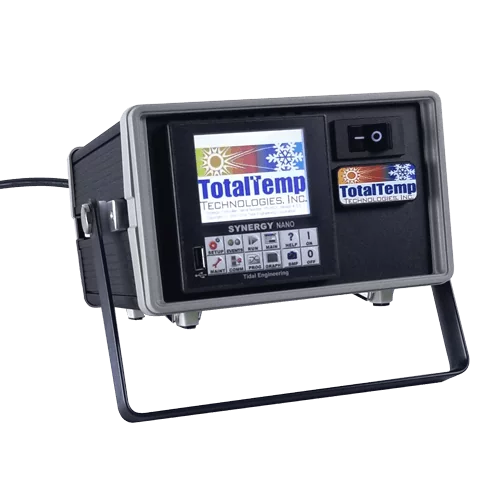
Rising lab-space costs have made large-footprint chambers increasingly to justify. TotalTemp addresses this with engineered design choices that minimize footprint without compromising performance.

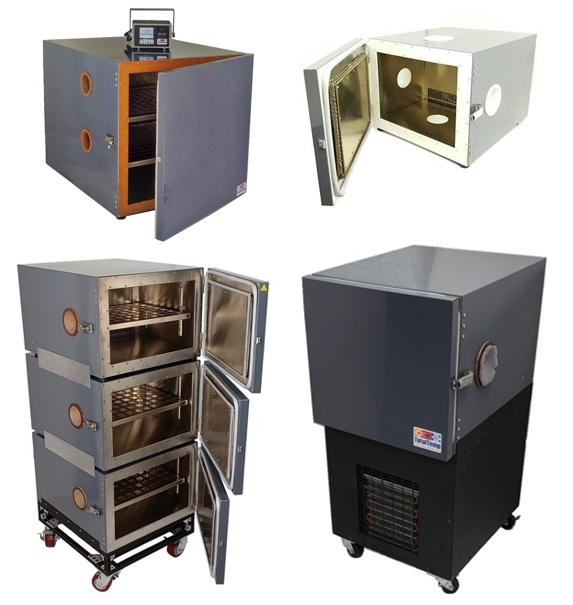
Dense fiber insulation allows TotalTemp to build chambers with 2‑inch‑thick walls while maintaining excellent R‑value. This makes it possible to achieve an interior of 25 inches (635 mm) with an exterior width of only 29 inches (737 mm). Most manufacturers require up to 40 inches (1016 mm) of width for the same interior space—wasting valuable lab real estate.
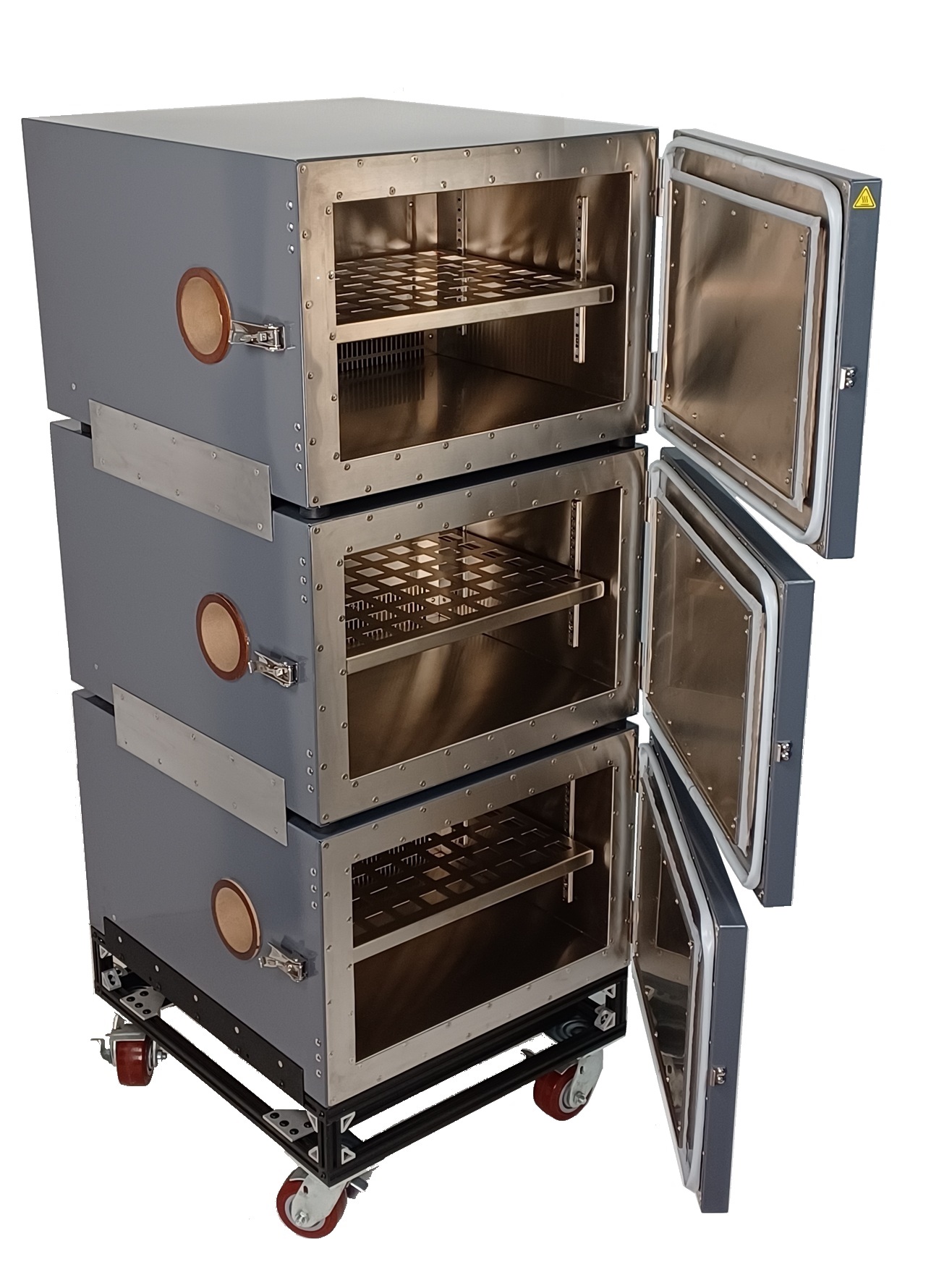
To further conserve space, TotalTemp chambers can be stacked up to three units high. Stacked or separated into different labs, these configurations dramatically increase test throughput without the requirement for more lab space.
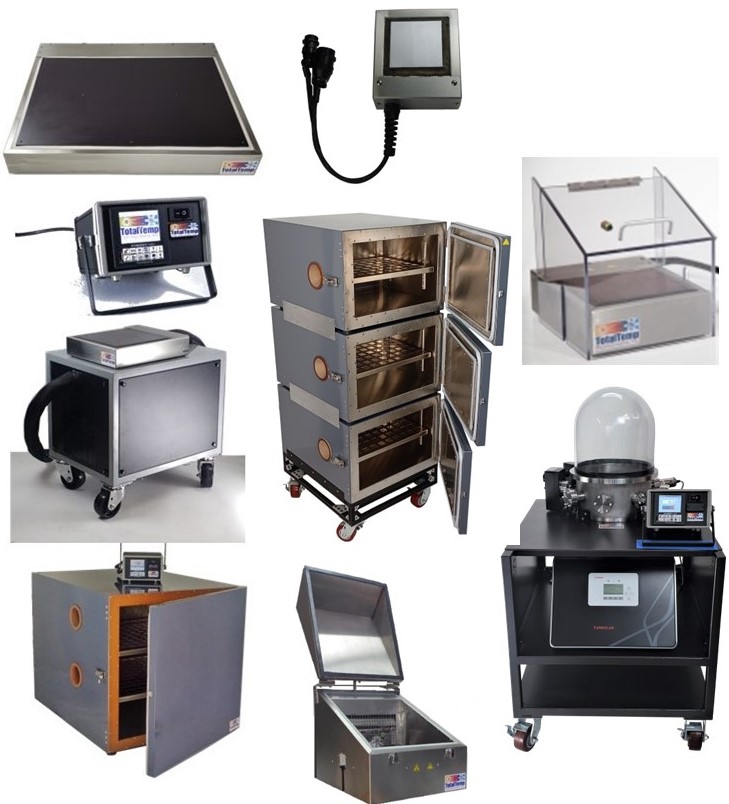
In industries where reliability is non‑negotiable, time tested applied sciences translate directly into faster development and better products
Temperature Chamber Science Revealed
Thank you for your interest. We look forward to supporting your thermal testing needs and contributing to the advancement of technology.

Please don’t hesitate to contact our support team at support@totaltemptech.com if you have any questions or need further information, we’re happy to help.





















© 2023 TotalTemp Technologies | All Rights Reserved |